
Top 20 Most In-Demand Jobs in Europe (2026): Skills & How to Apply

Imagine two applicants from India reading the same European job ad. Both have five years of experience. One sends a generic CV and asks, “Visa sponsorship available?” The other names the exact machines used, attaches a trade certificate, checks whether the profession is regulated and asks the employer which work-permit route fits the contract. The second applicant makes the hiring decision easier.
That is the purpose of this guide. These 20 jobs appear in European shortage research, but the useful question is not simply “Which jobs are in demand?” It is which job can you prove you can do, in which country, under which legal route?
For every role, you will find the work involved, skills, Indian qualification examples, documents, a realistic hiring obstacle and a question to put to the employer. Then use the country and visa checklist to turn that research into an application.
Start here: If you have an ITI or trade certificate, read the welding, electrical, mechanical and maintenance roles. If you have clinical training, read the nursing, physiotherapy and doctor sections with special attention to recognition. If you are changing careers, check whether an entry-level vacancy actually supports recruitment from India before spending money.
Reviewed 12 November 2026. This is an editorial shortlist, not an official ranking or a list of guaranteed vacancies. Qualification examples are starting points; all 20 images are AI-generated illustrations.
How we selected these jobs
The ELA’s 2024 report identifies widespread shortages in health, hospitality, construction, metalwork and transport. Its 2025 report says shortages remain widespread but increasingly concentrated, with important differences between countries. Eurostat’s experimental vacancy-rate statistics add another view, but online adverts can overrepresent some jobs and miss others. That is why we focus on occupation families and explain the local checks that matter.
For each role, check the exact country, region, employer and legal route. The official EURES shortages dashboard is more useful than a generic “Europe is hiring” headline.
Top 20 jobs in demand across Europe
1. Welder

What the job involves: Fabricates and repairs metal components for factories, construction and infrastructure.
Skills employers look for: MIG/MAG or TIG process, reading drawings, materials knowledge, safety discipline.
Qualification and legal check: Trade training and process-specific qualification or practical test; ask which code and material the employer uses.
Show in your CV: Welding processes and thicknesses worked; certification; quality and rework record.
Qualifications for Indian applicants: ITI Welder or recognised vocational training plus process-specific experience is a strong starting point. Employers may test MIG/MAG, TIG or stick welding; the accepted certificate and code depend on the project.
Documents and next check: Prepare ITI certificate, employer letters, process certificates, work photos where permitted and a record of materials and thicknesses. For Germany, check whether your training and proposed job fit the official skilled-worker or experienced-worker route; work history alone does not satisfy every route.
Search tip: Try “Welder” alongside the destination country’s local-language job title and filter for your actual experience level. Read each vacancy for shift pattern, licence rules and employer support before applying.
Reality check: A strong welding certificate names the process, position and material; “welding experience” alone tells a supervisor very little.
Ask the employer: Ask whether the practical test is paid, what metal and position it covers, and who supplies protective equipment.
2. Registered Nurse

What the job involves: Provides clinical care in hospitals, community services and long-term care.
Skills employers look for: Clinical assessment, medication safety, documentation, patient communication.
Qualification and legal check: Professional registration or qualification recognition and destination-language standards are usually essential.
Show in your CV: Licence status, clinical specialty, shift experience and documented language level.
Qualifications for Indian applicants: A GNM or BSc Nursing qualification and valid Indian nursing registration are starting documents, not permission to practise in Europe. The destination regulator assesses the Indian qualification and can require adaptation, exams and local-language proof.
Documents and next check: Gather degree or diploma, transcripts with clinical hours, registration, good-standing certificate, internship and work letters. Apply for recognition with the destination authority before presenting yourself as an EU-registered nurse.
Search tip: Try “Registered Nurse” alongside the destination country’s local-language job title and filter for your actual experience level. Read each vacancy for shift pattern, licence rules and employer support before applying.
Reality check: A hospital interview can come before licence approval, but you cannot assume the offer lets you start nursing immediately.
Ask the employer: Ask which regulator handles recognition, whether the employer funds adaptation or language training, and when paid clinical work can begin.
3. Cook

What the job involves: Prepares food in restaurants, hotels and institutional kitchens.
Skills employers look for: Food safety, station management, preparation, service under pressure.
Qualification and legal check: Experience or culinary training may be requested; hygiene requirements vary.
Show in your CV: Cuisine, service volume, station, HACCP or equivalent training.
Qualifications for Indian applicants: A culinary diploma, hospitality training or documented kitchen experience may fit different openings. Employers will assess the actual cuisine, service volume, hygiene practices and ability to work shifts.
Documents and next check: Show hotel or restaurant letters, culinary certificates, menus or portfolio where appropriate and references. For Germany, specialty-cook immigration is separate from some general skilled-worker routes; verify the category with the German mission.
Search tip: Try “Cook” alongside the destination country’s local-language job title and filter for your actual experience level. Read each vacancy for shift pattern, licence rules and employer support before applying.
Reality check: A recruiter may advertise “chef” while the contract says kitchen helper; that difference can affect pay and visa eligibility.
Ask the employer: Ask for the exact contractual job title, kitchen duties, gross pay and permit route before accepting.
4. Building Electrician

What the job involves: Installs and maintains electrical systems in buildings.
Skills employers look for: Wiring, fault finding, drawings, testing and safe isolation.
Qualification and legal check: Trade training; local licensing or recognition may be required.
Show in your CV: Systems installed, testing tools, safety credentials and qualifications.
Qualifications for Indian applicants: An ITI Electrician certificate, apprenticeship and proven site experience can support applications. Building electrical work may be regulated or restricted locally, so an Indian trade certificate is not automatically a local licence.
Documents and next check: List wiring systems, testing tools, safety training, installations and supervisor references. Check recognition and any registration requirements before applying for independent electrical work.
Search tip: Try “Building Electrician” alongside the destination country’s local-language job title and filter for your actual experience level. Read each vacancy for shift pattern, licence rules and employer support before applying.
Reality check: Electrical standards and authority to sign off work differ by country. Experience on Indian sites is valuable but not a local licence.
Ask the employer: Ask whether you will work under a licensed supervisor and what recognition or registration is needed.
5. Plumber and Pipe Fitter

What the job involves: Installs, repairs and maintains water, heating and pipe systems.
Skills employers look for: Pipework, diagnostics, technical drawings and building-code awareness.
Qualification and legal check: Vocational training and local certification where required.
Show in your CV: Materials, systems, projects and verified trade experience.
Qualifications for Indian applicants: ITI Plumber, pipefitting or mechanical-services training and documented installation experience are useful. Employers may ask about heating systems, press-fit or welding methods and local standards.
Documents and next check: Prepare project references, technical drawings you can discuss, certificates and examples of materials and pipe sizes. Check any local trade certification and the work-permit route.
Search tip: Try “Plumber and Pipe Fitter” alongside the destination country’s local-language job title and filter for your actual experience level. Read each vacancy for shift pattern, licence rules and employer support before applying.
Reality check: Two plumbing vacancies can require very different skills: domestic water systems, industrial pipework or heating installation.
Ask the employer: Ask for the system, materials, site location and whether national certification is mandatory.
6. Heavy Truck Driver

What the job involves: Moves freight across local, national or international routes.
Skills employers look for: Relevant driving licence, route planning, tachograph rules and safe loading.
Qualification and legal check: Correct licence category and professional driving qualification under national rules.
Show in your CV: Vehicle class, routes, clean record, endorsements and language ability.
Qualifications for Indian applicants: An Indian heavy-vehicle licence and driving experience do not automatically transfer to a European commercial licence. Employers may require local licence conversion or testing, professional driver qualification and language ability.
Documents and next check: Show licence history, vehicle classes, kilometres or routes, accident record and employer letters. Confirm who pays for conversion, training and permits before accepting.
Search tip: Try “Heavy Truck Driver” alongside the destination country’s local-language job title and filter for your actual experience level. Read each vacancy for shift pattern, licence rules and employer support before applying.
Reality check: A European employer may like your driving history but still require local licence conversion and professional qualification before the first shift.
Ask the employer: Ask who pays for conversion, training, medical checks and time without driving income.
7. Healthcare Assistant

What the job involves: Supports patients and clinical teams with daily care.
Skills employers look for: Personal care, observation, safeguarding, communication and shift reliability.
Qualification and legal check: Employer training and local care standards; immigration route may differ from nurse roles.
Show in your CV: Care setting, duties, training and references.
Qualifications for Indian applicants: A nursing assistant, caregiver or health-support certificate with practical experience can help. The role’s legal scope and training standards differ from registered nursing and from country to country.
Documents and next check: Show training hours, patient groups served, references and language ability. Ask the employer for the precise job title, duties and immigration route; do not assume a nurse visa applies.
Search tip: Try “Healthcare Assistant” alongside the destination country’s local-language job title and filter for your actual experience level. Read each vacancy for shift pattern, licence rules and employer support before applying.
Reality check: “Care assistant” may mean home care, residential care or hospital support; travel and night shifts can change the job substantially.
Ask the employer: Ask about patient-to-staff ratio, travel time between clients, training and paid hours.
8. Carpenter and Joiner

What the job involves: Builds, fits and repairs timber structures and components.
Skills employers look for: Measurements, drawings, hand and power tools, site safety.
Qualification and legal check: Apprenticeship, vocational training or demonstrable portfolio.
Show in your CV: Projects, materials, specialist techniques and site experience.
Qualifications for Indian applicants: ITI Carpenter, joinery apprenticeship or a strong documented portfolio can fit. Employers often distinguish formwork, structural carpentry, cabinetmaking and finish joinery.
Documents and next check: Show work samples, tool use, materials, drawings, measurements and supervisor letters. Check site safety training and whether the role qualifies for the country’s permit route.
Search tip: Try “Carpenter and Joiner” alongside the destination country’s local-language job title and filter for your actual experience level. Read each vacancy for shift pattern, licence rules and employer support before applying.
Reality check: A cabinetmaking portfolio does not automatically fit a site-formwork vacancy, even though both are called carpentry.
Ask the employer: Ask which type of carpentry dominates the role and request photos or drawings of typical work.
9. Motor Vehicle Mechanic

What the job involves: Diagnoses, services and repairs vehicles.
Skills employers look for: Diagnostics, electrical systems, mechanical repair and workshop safety.
Qualification and legal check: Trade qualification or extensive verifiable experience.
Show in your CV: Vehicle types, diagnostic tools and repair specialisms.
Qualifications for Indian applicants: ITI Motor Mechanic or automotive service training plus workshop experience is a credible base. Diagnostic experience with modern vehicles is often more valuable than a broad “mechanic” label.
Documents and next check: List vehicle types, diagnostic software, electrical systems, repairs and formal certificates. Ask about local safety training, technical assessments and contract conditions.
Search tip: Try “Motor Vehicle Mechanic” alongside the destination country’s local-language job title and filter for your actual experience level. Read each vacancy for shift pattern, licence rules and employer support before applying.
Reality check: Workshops may expect electronic diagnostics, not only mechanical servicing.
Ask the employer: Ask which vehicle makes, diagnostic platforms and repair systems the workshop uses.
10. Metalworking Machine Operator
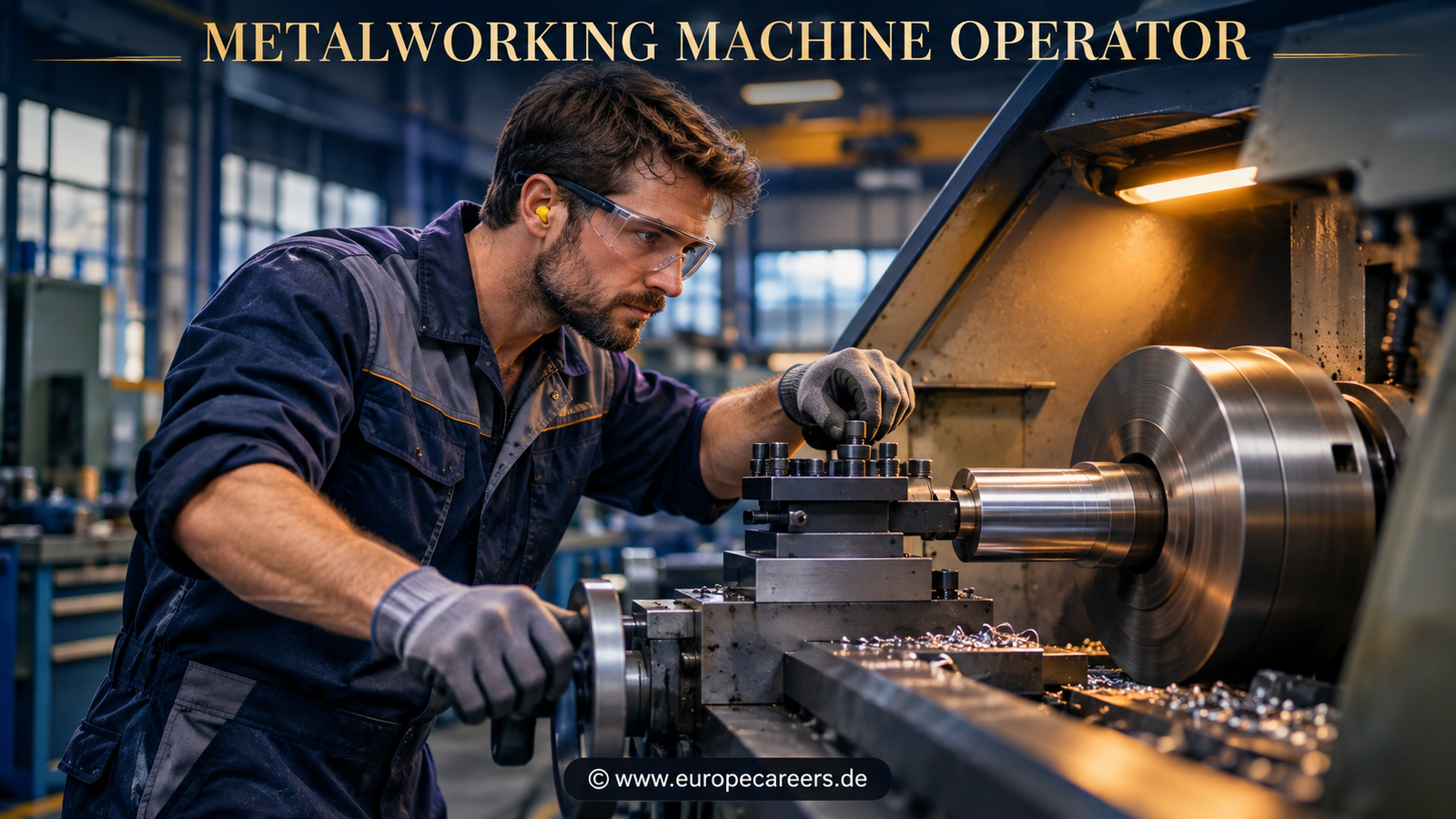
What the job involves: Sets up and operates production machinery.
Skills employers look for: CNC controls, measurement, tolerances and quality checks.
Qualification and legal check: Machine-specific training and practical competence.
Show in your CV: Machines, programming systems, tolerances and production metrics.
Qualifications for Indian applicants: An ITI machinist, turner or CNC-related qualification and machine experience can fit. Employers may test setup, offsets, tooling, reading drawings and tolerance control.
Documents and next check: List machine makes, controllers, materials, inspection tools, tolerances and shift responsibilities. Bring training certificates and detailed experience letters.
Search tip: Try “Metalworking Machine Operator” alongside the destination country’s local-language job title and filter for your actual experience level. Read each vacancy for shift pattern, licence rules and employer support before applying.
Reality check: Operating a CNC machine is different from setting it up and programming it. Job titles often blur that distinction.
Ask the employer: Ask whether the role includes setup, offsets, programming and inspection responsibility.
11. Sheet Metal Worker

What the job involves: Cuts, shapes and assembles sheet-metal products.
Skills employers look for: Fabrication, drawings, measurement and safe machine use.
Qualification and legal check: Trade experience or relevant vocational training.
Show in your CV: Materials, gauges, fabrication methods and finished-work portfolio.
Qualifications for Indian applicants: Fabrication or sheet-metal trade training and shop-floor experience are useful. Skills can range from cutting and bending to assembly and installation.
Documents and next check: Show materials, thicknesses, equipment, drawings and finished-product examples. Verify safety standards and the country-specific qualification or permit requirements.
Search tip: Try “Sheet Metal Worker” alongside the destination country’s local-language job title and filter for your actual experience level. Read each vacancy for shift pattern, licence rules and employer support before applying.
Reality check: Some sheet-metal roles are workshop fabrication; others involve roof or site installation at height.
Ask the employer: Ask where the work happens and which machines, materials and safety certificates are required.
12. Physiotherapist

What the job involves: Assesses movement and supports rehabilitation.
Skills employers look for: Clinical reasoning, treatment planning, documentation and communication.
Qualification and legal check: Regulated-profession recognition and language requirements are common.
Show in your CV: Registration status, specialty, caseload and language evidence.
Qualifications for Indian applicants: An Indian physiotherapy degree and professional experience are only the starting point. Physiotherapy is regulated in many destinations and usually requires recognition plus local-language ability.
Documents and next check: Gather full syllabus, clinical-hours evidence, internship, licence or registration where applicable and employer references. Apply to the destination’s recognition authority before advertising yourself as licensed there.
Search tip: Try “Physiotherapist” alongside the destination country’s local-language job title and filter for your actual experience level. Read each vacancy for shift pattern, licence rules and employer support before applying.
Reality check: An Indian physiotherapy degree must be assessed by the destination authority before you practise under a protected title.
Ask the employer: Ask about recognition timelines, required clinical hours, language tests and permitted work while waiting.
13. Medical Doctor

What the job involves: Diagnoses and treats patients in primary or specialist care.
Skills employers look for: Clinical expertise, decision-making, communication and patient safety.
Qualification and legal check: Medical registration, qualification recognition and language assessment.
Show in your CV: Specialty, training history, licence status and clinical references.
Qualifications for Indian applicants: An MBBS or postgraduate medical qualification from India does not grant an automatic European medical licence. Registration, degree assessment, clinical language and sometimes examinations or supervised practice may be required.
Documents and next check: Collect degree, internship and postgraduate evidence, medical registration, good standing, detailed work history and language certification. Check the medical regulator and official visa route in the exact destination.
Search tip: Try “Medical Doctor” alongside the destination country’s local-language job title and filter for your actual experience level. Read each vacancy for shift pattern, licence rules and employer support before applying.
Reality check: Doctors often face a longer licensing path than the visa process itself.
Ask the employer: Ask the regulator about degree assessment, language, knowledge tests and supervised practice before planning a start date.
14. Bus and Tram Driver

What the job involves: Transports passengers safely on scheduled services.
Skills employers look for: Passenger safety, route knowledge, communication and reliability.
Qualification and legal check: Correct licence and professional requirements; local language often matters.
Show in your CV: Licence class, passenger experience and safety record.
Qualifications for Indian applicants: An Indian commercial/passenger driving licence and bus experience can support an application, but passenger transport needs the destination’s licence category and professional qualification.
Documents and next check: Show licence and safety record, passenger-service experience and languages. Clarify licence conversion, medical fitness, training cost and employer support.
Search tip: Try “Bus and Tram Driver” alongside the destination country’s local-language job title and filter for your actual experience level. Read each vacancy for shift pattern, licence rules and employer support before applying.
Reality check: Passenger safety and communication make local-language requirements more important than many applicants expect.
Ask the employer: Ask about route training, passenger interaction, licence conversion and who pays during training.
15. HVAC Technician

What the job involves: Installs and services heating, ventilation and cooling systems.
Skills employers look for: Refrigeration, electrical basics, fault finding and maintenance.
Qualification and legal check: Trade certification and refrigerant-handling permissions where applicable.
Show in your CV: Systems serviced, certifications and maintenance outcomes.
Qualifications for Indian applicants: ITI Refrigeration and Air Conditioning or mechanical/electrical training plus field experience is a strong base. Refrigerant work may require local certification.
Documents and next check: Show systems serviced, fault types, controls knowledge, maintenance logs and safety certificates. Confirm refrigerant permissions and employer-supported training.
Search tip: Try “HVAC Technician” alongside the destination country’s local-language job title and filter for your actual experience level. Read each vacancy for shift pattern, licence rules and employer support before applying.
Reality check: Refrigerant-handling rules can prevent an experienced technician from performing certain tasks until locally certified.
Ask the employer: Ask which refrigerants and systems are used and whether the employer supports local certification.
16. Construction Trades Worker

What the job involves: Supports building, renovation and civil projects.
Skills employers look for: Site safety, trade-specific tasks, teamwork and equipment handling.
Qualification and legal check: Requirements vary sharply between skilled trades and general labour.
Show in your CV: Trade, site type, equipment and safety training.
Qualifications for Indian applicants: A construction worker is not one uniform occupation. A certified mason, steel fixer or concrete finisher may have a different career and visa profile from an entry-level labourer.
Documents and next check: Name your trade precisely, with project size, tools, safety courses and employer letters. Check whether the legal route accepts the advertised skill level before paying an agent.
Search tip: Try “Construction Trades Worker” alongside the destination country’s local-language job title and filter for your actual experience level. Read each vacancy for shift pattern, licence rules and employer support before applying.
Reality check: “Construction worker” is too broad for a persuasive international application.
Ask the employer: Ask whether the actual vacancy is for masonry, concrete finishing, steel fixing, plastering or general labour.
17. Baker

What the job involves: Produces bread and pastry for shops or industrial food operations.
Skills employers look for: Dough preparation, ovens, timing, hygiene and consistent quality.
Qualification and legal check: Vocational training or substantial production experience.
Show in your CV: Product range, volume, machinery and shift experience.
Qualifications for Indian applicants: Bakery or food-production training and hands-on experience can fit artisanal or industrial roles. Employers may test dough handling, oven control, food safety and early-morning shift readiness.
Documents and next check: Show products, daily volume, equipment, hygiene training and references. Clarify the contract’s hours, night premiums and seasonal status.
Search tip: Try “Baker” alongside the destination country’s local-language job title and filter for your actual experience level. Read each vacancy for shift pattern, licence rules and employer support before applying.
Reality check: A hotel bakery, artisan shop and industrial line have different equipment and schedules.
Ask the employer: Ask about production volume, night work, overtime rules and the specific products.
18. Butcher and Meat Processor

What the job involves: Prepares meat and food products safely.
Skills employers look for: Knife work, processing, hygiene, traceability and cold-chain discipline.
Qualification and legal check: Food-safety training and employer-specific standards.
Show in your CV: Species, cutting methods, production environment and hygiene training.
Qualifications for Indian applicants: Butchery or meat-processing training and experience may be useful, but employers apply strict hygiene, traceability and safety standards.
Documents and next check: Document cutting skills, production setting, cold-chain work and food-safety training. Check accommodation and agency deductions closely when offered.
Search tip: Try “Butcher and Meat Processor” alongside the destination country’s local-language job title and filter for your actual experience level. Read each vacancy for shift pattern, licence rules and employer support before applying.
Reality check: Factory meat processing may involve cold environments, repetitive tasks and agency accommodation.
Ask the employer: Ask for the temperature, line pace, protective gear, housing deduction and transport terms.
19. Industrial Maintenance Technician

What the job involves: Keeps production equipment running through inspection and repair.
Skills employers look for: Mechanical and electrical troubleshooting, preventive maintenance and controls.
Qualification and legal check: Technical qualification or verifiable industrial experience.
Show in your CV: Equipment, uptime improvements, PLC exposure and maintenance logs.
Qualifications for Indian applicants: An ITI fitter, electrician, diploma engineer or mechatronics background can fit industrial maintenance, depending on equipment and scope. Employers often seek evidence of preventive and breakdown maintenance.
Documents and next check: List machines, PLC exposure, troubleshooting, lockout procedures, work orders and uptime improvements. Match the CV to the factory’s specific equipment.
Search tip: Try “Industrial Maintenance Technician” alongside the destination country’s local-language job title and filter for your actual experience level. Read each vacancy for shift pattern, licence rules and employer support before applying.
Reality check: A technician may be expected to handle both electrical and mechanical breakdowns, even if trained primarily in one.
Ask the employer: Ask which systems dominate, whether PLC work is hands-on, and what call-out shifts involve.
20. Software Developer

What the job involves: Builds and maintains software products and systems.
Skills employers look for: Programming, testing, collaboration, version control and problem solving.
Qualification and legal check: Portfolio and experience matter; immigration routes can require qualifications or pay thresholds.
Show in your CV: Shipped products, tech stack, code samples and measurable impact.
Qualifications for Indian applicants: A computer science degree, relevant diploma or substantial development experience can fit, but employers assess shipped work and technical depth. Some immigration routes have salary or qualification thresholds.
Documents and next check: Provide a portfolio, GitHub or project evidence, stack, testing practices and production outcomes. Apply to employers with roles matching your experience, and verify the precise permit route rather than assuming every tech job qualifies.
Search tip: Try “Software Developer” alongside the destination country’s local-language job title and filter for your actual experience level. Read each vacancy for shift pattern, licence rules and employer support before applying.
Reality check: A high number of tech vacancies does not mean junior applicants automatically qualify for a work visa.
Ask the employer: Ask whether the employer hires from India, what permit route it uses and whether the role meets any salary or qualification conditions.
Which path fits your background?
| Your starting point in India | Roles to research first | Biggest early check |
|---|---|---|
| ITI or vocational trade training plus experience | Welder, electrician, plumber, mechanic, CNC operator, HVAC or maintenance technician | Does the destination accept the qualification and does the offer fit a work route? |
| Nursing or allied-health qualification | Nurse, healthcare assistant or physiotherapist | Is the profession regulated, and what language and recognition steps apply? |
| Commercial driving experience | Truck or bus driver | Can the licence be converted or obtained, and who funds the required training? |
| Hospitality or food-production experience | Cook, baker or butcher | What is the exact contract title, shift pattern and immigration route? |
| Software training and shipped projects | Software developer | Does your level match overseas hiring and the applicable permit threshold? |
This table narrows your research. It does not certify eligibility. Check official authorities and each current vacancy before acting.
Documents to prepare before applying from India
Create a digital folder for each target occupation. Start with a valid passport, a role-specific CV, qualification certificates, full transcripts or mark sheets, apprenticeship evidence, licences, detailed experience letters and professional references. Employment letters should state dates, duties and contact details; a generic “worked here” certificate rarely explains your skill level.
For regulated professions, gather course syllabi, classroom and clinical hours, internship evidence, registration and a certificate of good standing where relevant. The destination authority may ask for certified copies, translations or verification directly from the issuer. Check its current checklist before paying for these services.
For a German professionally experienced-worker route, the German mission in India says experience alone is not enough: a qualifying formal training or degree is also required. It gives further conditions for experience, job offer and pay. Other routes and countries have different rules.
Visa, professional recognition and licensing: three separate checks
First, the job: Does the employer accept your training and experience? Second, the profession: Does the destination regulate the work or require local registration? Third, immigration: Does your nationality and offer fit a lawful route? You need all applicable answers, not just a recruiter saying “sponsorship available.”
The EU guidance on regulated professions says qualifications earned outside the EU need recognition in the EU country where you want to work. This is especially relevant to doctors, nurses and physiotherapists. EU automatic recognition rules do not mean that an Indian degree is automatically accepted. The regulator may impose language, adaptation or assessment requirements.
Use the EU Immigration Portal for country and category information, then the destination’s national authority or embassy for the current checklist. In Germany, the German mission in India lists distinct employment visa categories. Do not use a visitor visa as a substitute for work authorisation.
Language: the requirement that job ads may understate
English can be enough for some international teams, but safety briefings, patients, passengers and customers often require the local language. Ask whether the stated level is needed at interview, at the start date or before professional registration. An employer’s informal “we can manage in English” does not override a regulator’s language rule.
Build a role-specific plan: learn workplace vocabulary, practise describing past tasks and collect accepted test evidence if the authority asks for it. Put your true level on the CV; overstating it is easy to expose in a practical interview.
How much do these jobs pay?
There is no responsible Europe-wide salary figure for a single job. Pay depends on country, region, seniority, collective agreement, shift work and hours. Compare current offers for the same role and location. Record the gross base pay, guaranteed hours, overtime, taxes, social contributions, accommodation deductions and commuting costs. Eurostat’s 2026 minimum-wage data gives context, but a minimum wage is neither an average trade salary nor a take-home-pay estimate.
A salary example that shows why the contract matters
Suppose two offers both advertise €2,600 gross per month. Offer A guarantees 40 paid hours a week and charges €450 for accommodation. Offer B quotes a figure that includes estimated overtime and deducts €700 for a shared room. Without knowing tax, social insurance and actual paid hours, neither headline tells you which offer leaves more money. Request a written breakdown and make a budget for the city where you will work.
How to apply from India, step by step
- Pick a precise role. “MIG/MAG welder,” “ICU nurse” or “CNC setter” gives employers more information than “any job.”
- Pick two destinations. Use the EURES shortage dashboard and recent vacancies for the same occupation.
- Check regulated status and visa route. Read national authority pages before paying a recruiter.
- Gather proof. Prepare certificates, transcripts, full experience letters, licences, portfolio and language evidence.
- Tailor your CV. Name tools, machines, patient settings, service volume or shipped products. Use Europass if helpful, but follow the employer’s requested format.
- Apply through verified channels. Use EURES, national public employment services and official employer careers pages. Search the local-language title too.
- Prepare for assessment. Expect trade tests, clinical or language checks, technical interviews or driving-licence questions depending on the role.
- Verify the offer. Get the legal employer, gross pay, guaranteed hours, location, deductions, housing and permit responsibilities in writing.
- Apply through the proper consular route. Follow the relevant authority’s latest appointment and document instructions. Wait for authorisation before starting work.
See our Complete Guide to Finding Jobs in Europe for broader job-search tactics and our country comparison to shortlist destinations. The EURES fraud guide explains warning signs such as fake sender domains and requests to receive or forward money.
Frequently asked questions
Which job is most in demand in Europe?
No single occupation leads in every country. ELA reports particularly widespread shortages in roles such as welders, nurses, cooks and electricians, while demand varies by location and year.
Can I get an in-demand job without a degree?
Yes, some trades and service jobs accept vocational training rather than a university degree. But “degree not required” does not mean “no formal training or visa conditions.” Germany’s experienced-worker route, for example, can require a recognised formal qualification from the country where it was obtained as well as experience and a qualifying offer. Check the route before applying.
Are all these jobs open to non-EU applicants?
No. Employer willingness and national immigration rules differ. Check the actual permit route before assuming a listing supports overseas hiring.
Does English alone qualify me?
Some international workplaces operate in English, but local language may be essential for care, safety, passengers or customer service. Confirm the level in each vacancy.
Where can I verify current vacancies?
Search EURES, the destination’s public employment service and official employer career pages. Compare recent listings rather than relying on old “top jobs” articles.
Choose the role that fits your evidence
The strongest application is built around a job you can actually do, in a location where employers are recruiting, under a legal route you can meet. Use the 20 roles above to narrow your research, then assess real offers carefully before making a move.