
Anesthesia Technician Jobs in Europe for Indian Professionals
A comprehensive roadmap for Indian B.Sc. Anesthesia Technologists, OT Technicians, and Paramedical Specialists seeking permanent hospital careers in Germany under the ATA-OTA-Gesetz framework.
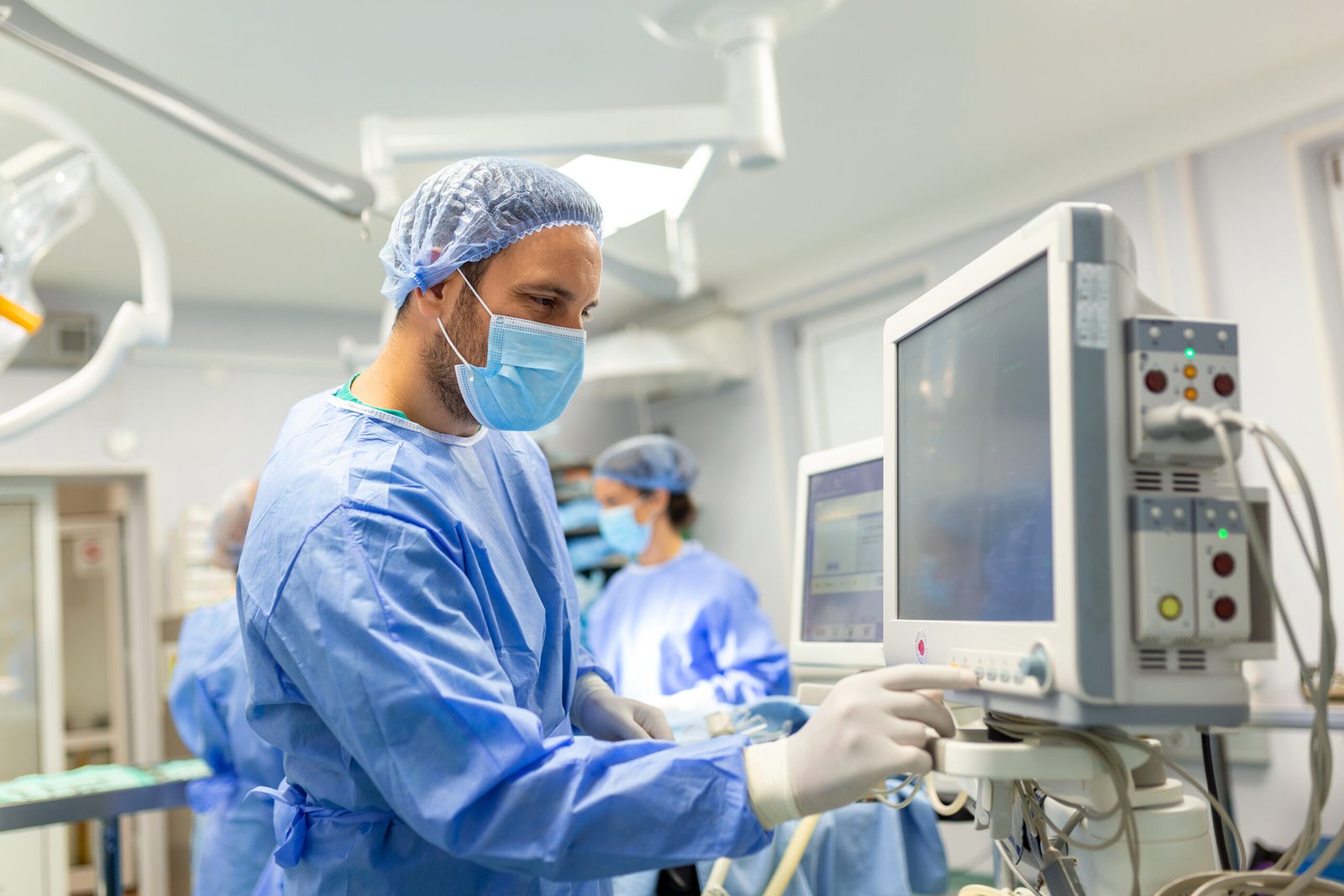
Indian Healthcare Qualifications Compared with European Norms
Understanding how Indian degrees from state medical universities, deemed institutes, and paramedical boards align with the German Anästhesietechnische Assistenz (ATA) vocational curriculum.
B.Sc. Anesthesia Technology (3 Years + 1 Year Internship)
Graduates possessing a 3-year academic curriculum followed by a mandatory 1-year rotational clinical internship at university-affiliated hospitals meet the highest number of practical clinical hours required in Germany.
- Covers 1,600+ theoretical lecture hours
- Logged ICU & perioperative rotations
B.Sc. Operation Theatre & Anesthesia Technology (OTAT)
Combined programs covering both surgical scrub/instrumentation and anesthesia delivery. In Germany, this dual scope can qualify candidates for either ATA (Anesthesia) or OTA (Operation Theatre Assistant) career pathways.
- Flexible assessment under ATA-OTA law
- Broad multi-surgical department exposure
Diploma in Anesthesia / OT Technology (2 Years)
Paramedical diplomas issued by state medical faculty boards require careful syllabus hour evaluation. Candidates typically require verified post-qualification hospital work experience to bridge clinical deficit hours.
- Supported by 2+ years NABH hospital tenure
- Additional adaptation hours applied
NCAHP Act Compliance: The implementation of the National Commission for Allied and Healthcare Professions Act (NCAHP) in India has significantly standardized Allied Health qualifications. German recognition authorities recognize university transcripts that explicitly detail clinical credit hours and practical OT case distributions.
The German ATA-OTA-Gesetz Legal Framework
Federal legislation enacted across Germany establishes Anästhesietechnische Assistenz as a protected medical vocation, creating transparent rights, salary bands, and migration channels.
Protected Professional Designation
Under the Anästhesietechnische- und Operationstechnische-Assistenten-Gesetz, only individuals who have passed state examination or secured official equivalency from state healthcare offices may use the professional title Anästhesietechnischer Assistent (ATA).
- Prevents unlawful hiring under lower assistant pay grades
- Guarantees permanent federal healthcare tariff classification
The Gleichwertigkeitsprüfung Mandate
The law grants foreign healthcare professionals the legal entitlement to have their foreign qualification reviewed against the German 3-year curriculum (comprising 2,100 theoretical hours and 2,500 clinical practice hours).
- Objective state ministry assessment
- Clear legal rights to complete compensatory adaptation
Clinical Scope: Indian vs European Surgical Theatres
While technical fundamentals remain identical, European hospitals place heavy emphasis on digital charting, workstation leak safety, and close physician-assistant collaboration.
Advanced Workstation Handling
Routine operation and pre-op diagnostic testing of computerized anesthesia workstations, primarily Dräger Perseus A500, Primus, and GE Healthcare Avance CS2 systems, including digital soda lime monitoring.
Airway & Video Instrumentation
Preparation and sterile handling of advanced videolaryngoscopes (GlideScope, Storz C-MAC), supraglottic devices, and fiberoptic bronchoscopes for routine and anticipated difficult intubations.
Invasive Line Assembly
Zero-tolerance sterile preparation of arterial lines, central venous pressure transducers, ultrasound guidance kits, and pulse contour cardiac output (PiCCO) diagnostic circuits.
Infusion & Pharmacology Setup
Programming Target Controlled Infusion (TCI) syringe drivers, epidural infusion sets, and multimodal analgesia lines strictly under the supervising anesthesiologist's direction.
Autotransfusion & Resuscitation
Mastery over intraoperative cell salvage units (Cell Saver), Level 1 rapid blood warmers, external defibrillators, and direct assistance during perioperative cardiac arrests.
Digital Protocol Documentation
European clinical suites use digital anesthesia information management systems (AIMS) for paperless tracking of narcotics, equipment batch codes, and surgical phase milestones.
Eligibility Criteria for Indian Technicians
Detailed checklist required for initial profile acceptance, document assessment, and hospital interview shortlisting.
Academic Qualifications
Regular full-time B.Sc. Anesthesia Technology or B.Sc. OTT from a UGC / state paramedical board recognized institution with no active backlogs.
Verifiable Clinical Experience
Minimum 1 to 2 years of continuous, verifiable service in a 150+ bedded NABH or JCI accredited hospital operating theatre department.
Paramedical Council Standing
Active registration certificate with your respective State Paramedical Council or enrollment under the national NCAHP portal.
Physical & Medical Fitness
Ability to sustain long operating room standing hours, freedom from infectious bloodborne pathogens, and full Hepatitis B immunization.
Police Clearance Record
Clean background verification check from the Regional Passport Office (RPO) with zero criminal history or immigration violations.
Language Commitment
Readiness to learn German systematically up to certified B2 proficiency via accredited testing centers (Goethe-Institut, telc, or ÖSD).
The Defizitbescheid Evaluation Process in Germany
Understanding the official assessment notice issued by the Landesprüfungsamt für Gesundheitsberufe and how it enables legal entry to Germany.
What is a Defizitbescheid?
When an Indian Anesthesia Technologist applies for qualification recognition in a German federal state, the assessing health authority compares their university syllabus and clinical internship hours against the federal ATA curriculum.
Because of minor structural differences between European vocational schooling and Indian university systems, the authority issues a formal legal assessment document called a Defizitbescheid (Deficit Notice). This document specifies the exact clinical rotation hours or theoretical subjects needed to obtain full equivalence.
Why It Is an Advantage for Indian Applicants
A Defizitbescheid is not a rejection. In reality, it is the primary legal key that enables an Indian healthcare professional to apply for a Section 16d Recognition Visa at the German Embassy or Consulate in India.
German hospital employers actively recruit Indian technicians who hold this assessment notice, offering them a salaried adaptation contract (*Anpassungslehrgang*) to bridge the identified deficit directly inside their surgical wards.
Bridging the Deficit: Adaptation Course vs Knowledge Exam
Candidates have two distinct legal pathways under German law to convert their foreign qualification into a permanent, unrestricted state license (*Urkunde*).
Option A: Clinical Adaptation Period (Anpassungslehrgang)
The technician works directly in a German hospital operating theatre under clinical supervision while receiving a full-time monthly trainee salary. The hospital signs off on required clinical rotational hours (e.g., pediatric anesthesia, emergency resuscitation).
- Duration: typically 6 to 12 months
- Monthly adaptation salary: approx. 2,400 to 2,750 Euros (Rs 2.54 to 2.91 Lakhs)
- Concludes with an internal clinical interview rather than a theoretical board exam
Option B: Practical Knowledge Test (Kenntnisprüfung)
Instead of completing months of supervised training hours, the candidate can choose to appear for a formal oral and practical state examination testing perioperative knowledge, emergency protocols, and medical German terminology.
- Shorter timeframe if candidate is academically prepared
- Requires rigorous command of German clinical medical terminology
- Failure can necessitate repeating clinical modules
Language Roadmap: From Beginner to Medical German
Patient safety in surgical environments demands clear verbal communication. Follow this structured roadmap designed for Indian healthcare professionals.
German A1 - A2
Basics of German grammar, sentence construction, general greetings, numbers, and basic workplace instructions.
German B1
Intermediate conversation, ability to understand hospital routines, patient interactions, and clinical department directives.
German B2
Professional fluency required for visa issuance and official state license. Mastery of complex sentence structures and medical handovers.
Fachsprache Perioperative
Specialized terminology for surgical instrumentation, hemodynamic parameters, medication classifications, and rapid emergency cues in theatre.
Document Preparation & Authentication in India
A step-by-step checklist of Indian educational credentials and government authentications required before submission to European state ministries.
1. University Transcripts & Degree
Procure official transcripts from your Indian university or state medical faculty showing subject-wise theory and practical marks.
2. Detailed Syllabus Hours
Official course breakdown signed by the college principal specifying total hours dedicated to anesthesia, anatomy, physiology, and pathology.
3. State HRD Attestation
Educational document verification by the Regional Human Resource Development / Higher Education Department of your home state.
4. MEA Apostille Stamp
Official Apostille certification by the Ministry of External Affairs (MEA), Government of India, validating documents for international legal use.
5. Sworn German Translations
Complete certified translation of all certificates into German by a court-sworn translator (*Vereidigter Übersetzer*).
6. Passport Office PCC
Police Clearance Certificate issued by the Regional Passport Office (RPO) under the Ministry of External Affairs, India.
Your Journey: From Indian OT to European Hospital
Europe Careers guides you transparently through an 8 to 14 month timeline, coordinating your language milestones, state filings, and hospital onboarding.
Profile Screening
Review of Indian degree transcripts, hospital case volume, and syllabus evaluation.
German Language
Intensive German learning up to certified B2 standard through accredited training partners.
MEA Apostille
HRD attestation, MEA Apostille in New Delhi, and sworn German document translation.
Defizitbescheid
Submission of the dossier to the German Landesprüfungsamt for official equivalence assessment.
Hospital Matching
Online video interviews with German public and municipal hospitals; contract signing.
Visa & Relocation
Section 16d visa processing at VFS India, flight booking, and hospital housing induction.
Salary & Remuneration: Euro & INR Figures
German hospital compensation is strictly governed by collective public tariff agreements (TVöD-K / TV-L), ensuring equitable pay and transparent step increments.
| Career Stage | German Professional Designation | Monthly Gross (EUR) | Monthly Gross in INR (at Rs 106 / EUR) | Annual Equivalent (INR) |
|---|---|---|---|---|
| Adaptation Training During Section 16d recognition phase | ATA in Anerkennung | 2,400 to 2,750 Euros | Rs 2,54,400 to Rs 2,91,500 | Rs 30.5 to 34.9 Lakhs |
| Licensed Staff ATA Entry-level with full Urkunde (TVöD P 7/8) | Staatlich anerkannter ATA | 3,200 to 3,900 Euros | Rs 3,39,200 to Rs 4,13,400 | Rs 40.7 to 49.6 Lakhs |
| Senior ATA / Shift Lead 3 to 5 years experience, specialty lead | Fach-ATA / Schichtleitung | 3,950 to 4,600+ Euros | Rs 4,18,700 to Rs 4,87,600+ | Rs 50.2 to 58.5 Lakhs |
Night Duty Premium
Additional 20% to 25% tax-advantaged hourly pay for overnight surgical coverage and emergency standby.
Sunday & Holiday Rates
Premiums of 25% to 50% for weekend service, and up to 135% for national public holiday shifts.
Annual Special Payment
Annual Christmas bonus (Jahressonderzahlung) equivalent to 60% to 85% of monthly salary.
Cost of Living, Taxation & Indian Remittance Potential
A realistic budget projection showing monthly living expenditures, statutory health and pension contributions, and potential remittance to India.
| Monthly Budget Component | Estimated Cost (EUR) | Estimated Cost in INR (at Rs 106 / EUR) | Explanatory Notes |
|---|---|---|---|
| Gross Monthly Base Pay (Licensed ATA) | 3,500 Euros | Rs 3,71,000 | Mid-band public hospital tariff |
| Social Security & Taxes (Tax Class 1) | Approx. 1,250 Euros | Rs 1,32,500 | Includes health, pension, nursing care, unemployment insurance |
| Net In-Hand Salary | 2,250 Euros | Rs 2,38,500 | Credited directly to German bank account |
| Apartment Rent & Utilities (Warmmiete) | 650 to 850 Euros | Rs 68,900 to Rs 90,100 | Furnished studio or hospital shared accommodation |
| Groceries & Personal Food | 250 to 300 Euros | Rs 26,500 to Rs 31,800 | Supermarkets (Rewe, Lidl, Aldi, Indian stores) |
| Public Transport (Deutschlandticket) | 49 Euros | Rs 5,194 | Unlimited local trains and buses across all of Germany |
| Mobile, Internet & Incidentals | 80 to 100 Euros | Rs 8,480 to Rs 10,600 | High-speed sim and home broadband |
| Net Monthly Savings for Indian Remittance | 1,000 to 1,250 Euros | Rs 1,06,000 to Rs 1,32,500 | Send home to family in India every single month |
Top European Destinations for Indian Technicians
Comparison of European markets regarding licensing laws, English vs local language mandates, and permanent residency prospects.
Germany
Clear, legally mandated recognition under the ATA-OTA-Gesetz. Direct Section 16d visa availability, hospital-sponsored adaptation, and the shortest route to permanent residency (3 years with B2 German).
- High demand in all 16 federal states
- Permanent contract protection
Ireland
Public HSE and private acute hospitals offer opportunities for theatre support personnel. Requires OET or IELTS test certification. Visa issuance is linked to Critical Skills Employment lists and local employer sponsorship.
- English language work environment
- Competitive private hospital market
Austria & Switzerland
Austria offers positions under the Diplomierter Anästhesieassistent designation; Switzerland features high wages but requires European equivalence verification. Both demand certified fluent B2 German proficiency.
- High gross salary scales
- Strict credential nostrification
Visa Processing via German Missions in India (Section 16d)
Understanding the streamlined visa procedure at VFS Global centers and German Consulates across New Delhi, Mumbai, Bengaluru, Chennai, and Kolkata.
Section 16d Residence Act
A specialized national visa category created to allow qualified foreign healthcare workers to enter Germany to complete their adaptation training in hospital settings.
ZAV Pre-Approval Support
Hospital employers secure pre-approval from the Federal Employment Agency (*Zentrale Auslands- und Fachvermittlung - ZAV*), reducing embassy processing times.
No Blocked Account Needed
Because the hospital adaptation contract includes a monthly salary of 2,400+ Euros, Indian candidates do not need to deposit funds into a German blocked account (Sperrkonto).
VFS Global Appointment
Europe Careers assists candidates in compiling the complete appointment dossier: Defizitbescheid, contract, language certificate, and travel medical insurance.
Visa Processing Duration
Standard embassy processing for Section 16d healthcare applications generally ranges between 4 and 8 weeks following biometric submission.
Permanent Settlement Pathway
Once full recognition is achieved and employment shifts to Section 18b (Skilled Worker), professionals become eligible for permanent residence (*Niederlassungserlaubnis*) in 3 years.
Work Culture & Life in European Hospital Operating Theatres
What Indian healthcare professionals can expect when stepping into European clinical teams: communication, rights, and work-life balance.
Flat Hierarchy & Respect
Surgical suites in Europe rely on Crew Resource Management (CRM). Anesthesia Technicians are respected clinical partners whose opinions on patient stability are valued.
Strict 38.5 to 40-Hour Work Week
Overtime is tightly monitored by hospital staff councils (Betriebsrat). Any extra hours worked are compensated with overtime pay or equivalent compensatory time off.
30 Days Paid Annual Vacation
Healthcare staff receive a statutory minimum of 30 working days of paid leave per year (excluding public holidays), allowing regular visits home to India.
World-Class Hygiene Protocols
European theatre departments enforce strict hygiene policies, including standardized sterile air filtration systems and advanced safety-engineered sharp disposal.
Continuing Clinical Education
Hospitals sponsor ongoing certifications, including Advanced Cardiac Life Support (ACLS), regional anesthesia workshops, and medical device updates.
Multicultural Clinical Teams
European healthcare facilities are diverse, welcoming doctors, nurses, and technical professionals from across Europe, India, Asia, and Latin America.
Frequently Asked Questions for Indian Technicians
Straightforward answers addressing Indian academic degrees, experience requirements, family visas, and long-term settlement.
Yes. Indian 3-year B.Sc. Anesthesia degrees (especially those coupled with a 1-year internship) are evaluated by the German State Healthcare Authority (Landesprüfungsamt). The state issues a Defizitbescheid outlining clinical hours to be completed during a paid hospital adaptation period in Germany, leading directly to the full ATA Urkunde.
While fresh graduates with a completed 1-year rotational clinical internship can be reviewed, having 1 to 2 years of verifiable, post-degree experience in a multi-specialty NABH or JCI-accredited hospital significantly strengthens the profile, minimizes identified curriculum deficits, and expedites hospital interview matching.
The German missions in India only accept certificates issued by ALTE-accredited examination providers: Goethe-Institut (Max Mueller Bhavan), telc GmbH, or ÖSD. For visa application under Section 16d, certified B1 or B2 proficiency is required depending on the employer contract and federal state regulations.
No. When you are hired by a German hospital for an adaptation position (Anpassungslehrgang), your employment contract guarantees a monthly gross salary of approximately 2,400 to 2,750 Euros (Rs 2.54 to 2.91 Lakhs). This salaried contract serves as official proof of financial subsistence for the German Embassy, eliminating the need for a blocked account.
Yes. Once you complete your adaptation period and obtain your full professional license (*Urkunde*) along with a permanent skilled worker employment contract, you are legally entitled to bring your spouse and dependent children under the German Family Reunification Visa (*Familienzusammenführung*). Your spouse also receives unrestricted employment rights in Germany.
A licensed Anesthesia Technician in Germany earning a standard public tariff base salary of 3,500 Euros receives roughly 2,250 Euros net in-hand after taxes and social insurance. After monthly expenditures for rent, food, transport, and utilities (approx. 1,000 to 1,200 Euros), technicians realistically save between 1,000 and 1,250 Euros per month (approx. Rs 1.06 to 1.32 Lakhs), which can be remitted directly to India.
If your Defizitbescheid identifies substantial differences, your sponsoring hospital arranges internal clinical rotations covering those precise gaps during your adaptation training. Europe Careers ensures that candidate profiles are matched with hospitals equipped to mentor foreign candidates through all required specialized modules.
Under modernized German immigration legislation, skilled healthcare professionals holding a permanent work contract and certified B2 German proficiency can apply for a Permanent Settlement Permit (*Niederlassungserlaubnis*) after 3 years of continuous employment and pension contributions in Germany.