TIG Welder Jobs in Slovakia – Skills, Certification and Employment Opportunities
If you have spent years welding stainless-steel pipes, pressure-vessel parts or precision components in India, you already know that TIG welding is not just about making a neat-looking bead. Employers want consistency, safe working habits, the ability to follow a drawing and a weld that passes inspection. For Indian skilled workers considering Europe, TIG welder jobs in Slovakia may be worth exploring—provided the role matches your experience and the employer can support a lawful recruitment process.
At Europe Careers, we help candidates understand overseas career requirements, organize trade documents, prepare CVs and navigate application steps. This guide explains the TIG skills, certification standards, qualifications, salary expectations and employment-residence considerations that Indian applicants should know. It is career guidance, not an advertisement for a confirmed vacancy or a promise of a visa.
TIG Welder Jobs in Slovakia: Quick Overview
| Key Detail | What Indian Candidates Should Know |
|---|---|
| Welding process | TIG/GTAW, commonly referred to as process 141 in European welding documents |
| Typical work | Stainless-steel pipes, precision fabrication, metal assemblies and industrial components |
| Relevant education | ITI, trade certificate, vocational training or documented practical experience, depending on the employer |
| Certification | Job-specific qualification may be requested; EN ISO 9606-1 can be relevant for steel welding |
| Salary context | A published Slovak TIG vacancy listed gross pay from €1,700/month in November 2026; offers vary |
| Work authorization | Employer-linked employment residence or another applicable legal route for non-EU workers |
| Europe Careers support | Profile guidance, CV preparation, document organization and application-process information |
What Does a TIG Welder Do in Slovakia?
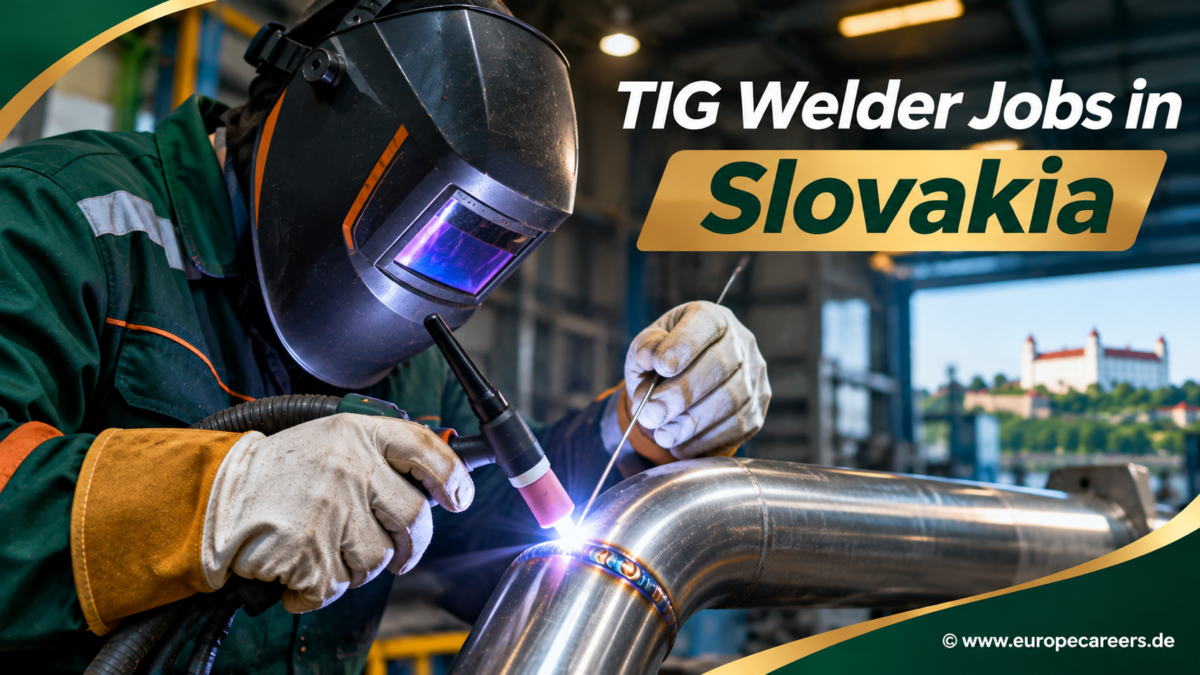
TIG stands for Tungsten Inert Gas welding, also known as Gas Tungsten Arc Welding (GTAW). It uses a non-consumable tungsten electrode and shielding gas to create a controlled weld. The process is particularly useful where precision and weld appearance matter. In European technical documentation, TIG is commonly identified as process 141.
A TIG welder in a Slovak industrial workshop may join stainless-steel tubing, weld machinery parts, work on pipe assemblies, prepare small fabrication components or carry out repair work. Some roles involve production batches, while others require careful one-off work. Your daily tasks depend on the employer: one factory may focus on thin stainless-steel sheets, another on industrial pipe systems.
Indian applicants should avoid applying to every job simply because the title says “welder.” A candidate experienced in MIG/MAG production welding may not be ready for a TIG pipe-welding trade test. Employers often ask for details such as the material grade, pipe diameter, wall thickness, weld position and whether the job requires root-pass work.
TIG Welder Qualifications, Skills and Salary – Comparison Table
The table below helps Indian candidates understand how different TIG roles compare. Salary examples are not guaranteed pay bands: actual wages depend on employer, location, shift system, qualifications and contract type. Only one sourced public example is shown because reliable, comparable salary data for every TIG specialization is not available.
| Job Profile | Typical Qualifications and Skills | Salary Information |
|---|---|---|
| TIG Stainless-Steel Welder | ITI/vocational training or practical TIG experience; process 141; clean joints and distortion control | Employer-specific; verify written gross salary |
| TIG Pipe Welder | Pipe welding positions, fit-up, root-pass quality, reading isometric drawings; trade test may apply | Employer-specific; verify written gross salary |
| Precision TIG Fabricator | Thin-gauge stainless steel, accurate measurement, careful heat input and quality inspection | Employer-specific; verify written gross salary |
| Industrial TIG Welder | Production drawings, consistent welds, safety compliance and experience with required materials | One published November 2026 vacancy: from €1,700 gross/month |
The €1,700 figure is a publicly advertised starting rate for a specific Slovak TIG position in November 2026, not a national average, current vacancy guarantee or prediction for 2027. The statutory 2026 minimum monthly wage was €915 at the lowest difficulty degree; higher work-difficulty degrees have higher legal minima. Confirm current rules and the exact job classification before signing.
Essential TIG Welding Skills Employers May Test
A certificate can help you reach an interview, but the practical test often decides whether you are suitable. Employers may ask you to prepare a joint, choose settings, weld a sample and explain how you check it. Being able to describe your process calmly is valuable, even when your English is not perfect.
1. Torch Control and Filler-Rod Technique
Good TIG work depends on consistent torch angle, travel speed, arc length and filler addition. You should understand how incorrect technique can cause contamination, poor fusion or an uneven bead. If you have experience with both autogenous and filler-added welds, describe where you used each.
2. Stainless-Steel Preparation and Cleanliness
Stainless-steel welding needs clean surfaces, suitable tools and contamination control. Employers may ask how you prevent oxidation, manage heat input and handle purging where the job requires it. Keep your answers practical: explain what you did in your previous workshop rather than repeating memorized definitions.
3. Welding Positions and Drawings
Welding flat plates is not the same as welding fixed pipes. Be specific about the positions you have worked in, such as PA, PB, PC or relevant pipe positions. Technical drawings, measurements, fit-up and tolerances are common interview topics.
4. Quality Inspection and Safety
Visual checks, correct personal protective equipment, ventilation, fire prevention and material handling are part of professional welding. Depending on the project, the employer may require additional non-destructive testing or procedure compliance. Never claim inspection qualifications you do not hold.
TIG Welding Certification: What Indian Applicants Need to Know
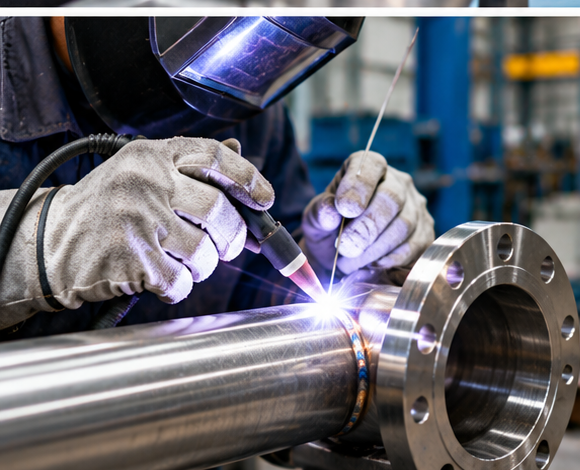
Many Indian welders ask whether an ITI certificate is enough for Europe. The answer depends on the specific vacancy. An ITI or vocational certificate demonstrates training, but an employer may also request evidence of practical ability or a current welder qualification. EN ISO 9606-1 is an important standard for qualification testing of welders working with steels; its relevance depends on the role, material and contract requirements.
Some employers use their own practical test, while others need a recognized qualification covering particular welding processes, materials, thicknesses and positions. A certificate issued for one combination does not necessarily cover every TIG job. Check the scope and validity of any certificate you already have before paying for another course.
At Europe Careers, we can guide you in organizing certificates and identifying the technical details to highlight in your CV. We cannot independently certify a welder unless a separate authorized certification arrangement is explicitly confirmed. Do not spend money on a training package merely because someone claims that “every European company requires it.”
Can Indian ITI Welders Apply Without a Degree?
A university degree is not a blanket requirement for every welding vacancy. Employers may accept trade training, an apprenticeship, ITI welding education, a relevant diploma or substantial documented workshop experience. Some companies specify secondary education and several years of practice; others may accept candidates with different backgrounds if they pass a test.
For an Indian candidate, a strong application explains the work clearly. Instead of writing “5 years welder,” state that you have five years of TIG process 141 experience on stainless-steel pipe assemblies, the approximate thicknesses handled, your drawing-reading ability and any certification or test results. That gives a recruiter something concrete to assess.
What Salary and Benefits Should TIG Welders Expect?
Salary should always be discussed in gross euros per month or per hour, with a clear explanation of deductions. A November 2026 Slovak TIG vacancy advertised a gross starting salary of €1,700 per month. Another advertised TIG/MIG/MAG role listed €1,200–€1,800 gross per month, depending on experience. These are examples from individual employers, not guaranteed salaries for overseas recruits.
Before accepting an offer, ask whether the pay includes shift allowances, whether overtime is optional, how weekend work is paid, and whether accommodation, transport or meals are subsidized. A gross offer may look attractive until you account for taxes, employee contributions, rent and commuting. Never calculate family savings from the headline salary alone.
Europe Careers can help you understand the questions to ask about a proposed employment contract. The employer remains responsible for issuing accurate written terms, and the actual wage must meet applicable Slovak requirements.
Where Could TIG Welders Work in Slovakia?
Relevant employers can include engineering workshops, machinery manufacturers, stainless-steel fabricators, pipework contractors and companies assembling industrial equipment. Worksites may be located in industrial towns rather than central Bratislava. The factory location matters because it affects housing, transport and the working language.
For a realistic search, match the job to your experience. A TIG pipe welder should look for pipework, stainless steel and process 141 requirements; a precision fabricator should look for thin-sheet and assembly work. Some employers recruit only people who already have Slovak work authorization, so applicants from India must ask about third-country hiring before assuming the role is available to them.

How Europe Careers Can Guide Indian TIG Welders
Moving abroad involves more than sending a resume. Candidates need to understand the employer’s requirements, prepare consistent documents and evaluate a job offer before making financial commitments. Europe Careers can provide practical guidance through these preparation stages:
- Profile review guidance: identify the welding process, materials, positions and experience to describe clearly.
- CV and document preparation: organize ITI or trade certificates, employment records and any welding test documentation.
- Application readiness: understand what employers may ask during interviews or practical assessments.
- Employment-offer guidance: learn how to review gross salary, hours, accommodation, deductions and worksite information.
- Work-residence information: understand the usual employer and authority steps, while verifying requirements with the responsible institutions.
Support depends on the services available and your individual circumstances. Europe Careers does not guarantee an interview, vacancy, placement or immigration decision.
Slovakia Work Permit and Employment Residence for Indians
For many Indian applicants, the legal route involves temporary residence for employment, often through a single permit based on a Labour Office confirmation that a vacancy may be filled. Other routes and exceptions exist. A job offer alone does not mean you can travel and begin work without checking the applicable authorization.
Under guidance available in August 2026, the prospective employer normally handles vacancy reporting and requests the relevant Labour Office confirmation. A reporting period of at least 20 working days generally applies, subject to exceptions. Once the appropriate confirmation has been issued, the applicant follows the required residence-application process. Some lawful work-start rules depend on submitting a complete application and the confirmation’s dates; do not assume that you must always wait for the physical residence card, or that any application automatically authorizes work.
Because requirements, appointment availability and procedures can change, candidates should verify their specific case before booking travel. Europe Careers can help explain the overall sequence and organize the questions you need to resolve, but only the relevant Slovak authorities can decide applications.
Documents Indian TIG Welders Should Prepare
Start by keeping a valid passport, updated CV, ITI or vocational certificates, welding qualification records and work-experience letters ready. Where relevant, prepare copies of previous employment contracts, salary slips and a concise description of welding projects. The residence process may additionally require criminal-record documentation, proof of accommodation, an application form and documents prepared in the required format.
Translations, legalization or apostille requirements depend on the document and filing route. Avoid paying for unnecessary services until the employer and competent Slovak mission clarify what is required. Europe Careers can guide you in making a document checklist, but you should confirm official filing instructions before submission.
How to Prepare for a TIG Welder Trade Test
If you are shortlisted, ask what process, material, thickness, joint type and welding position the test covers. Practise with equipment similar to what you will use, and focus on preparation and repeatable technique rather than rushing. Review common defects such as lack of fusion, porosity, tungsten contamination and excessive oxidation. Be ready to explain the purpose of purging if you are applying for stainless-steel pipe work.
During the test, follow the supervisor’s safety instructions and avoid improvising outside the stated procedure. If you have not worked with a particular position or material, say so. Honest skill matching is better than passing an interview and struggling on the factory floor.
Common Mistakes Indian Applicants Should Avoid
Do not assume that a Schengen tourist visa allows employment in Slovakia. Do not submit another person’s welding certificate or pay for a guaranteed visa. Avoid recruiters who refuse to identify the legal employer, explain the contract or provide receipts. Ask about accommodation deductions, shift patterns, probation, overtime and what happens if a trade test is unsuccessful.
Also be careful with salary comparisons. Hourly rates offered to self-employed contractors are not directly comparable to monthly gross employee salaries, because taxes, insurance and legal obligations may differ. Confirm whether the vacancy is a genuine employment contract and whether it is open to a worker applying from India.
Frequently Asked Questions – TIG Welder Jobs in Slovakia
Select a question to see the answer. For personal guidance, contact Europe Careers.
Can an Indian ITI welder apply for TIG jobs in Slovakia?
Yes, you can apply where employers accept vocational training and relevant TIG experience. Europe Careers can guide you in presenting your ITI qualification, welding history and trade-test readiness.
Is an EN ISO 9606-1 certificate compulsory for every job?
No single certificate is compulsory for every vacancy. Some employers specify EN ISO 9606-1 or another valid qualification and may conduct their own practical welding test.
Can Europe Careers help me prepare my TIG welder CV?
Europe Careers can guide you in organizing your experience, welding process 141, materials, welding positions, certifications and supporting documents into a clear application.
What salary can TIG welders earn in Slovakia?
Pay varies by employer and contract. One publicly advertised TIG role in November 2026 listed a starting gross salary of €1,700 per month; that is an example, not a guaranteed rate for Indian applicants.
Do I need Slovak language skills or IELTS?
There is no blanket IELTS rule for every TIG welding job. Employers may require Slovak or another language for workplace communication and safety.
Can Europe Careers guarantee a job or work permit?
No. Europe Careers can provide career and application guidance, but employers make hiring decisions and Slovak authorities decide immigration applications.
How can I contact Europe Careers?
Visit our Contact Us page and share your welding CV, experience, qualifications and preferred role. Our team can explain the next steps and the guidance available.
Final Advice for Indian TIG Welders
Slovakia may offer relevant opportunities for welders with real TIG experience, especially those comfortable with stainless steel, drawings and practical quality checks. But the right role depends on your technical background, a credible employer and the correct employment-residence procedure. A carefully prepared application is more valuable than applying to dozens of unrelated vacancies.
Europe Careers can help you understand eligibility, prepare a professional welding CV, organize documentation and evaluate the steps involved in applying. Start with your actual qualifications and experience, ask clear questions and make decisions only after checking written terms.
Contact Europe Careers
Interested in TIG welder opportunities in Slovakia? Share your welding profile, process 141 experience, ITI or trade qualifications and relevant certificates with Europe Careers. Our team can explain available guidance and suitable next steps, subject to your eligibility and actual employer opportunities.