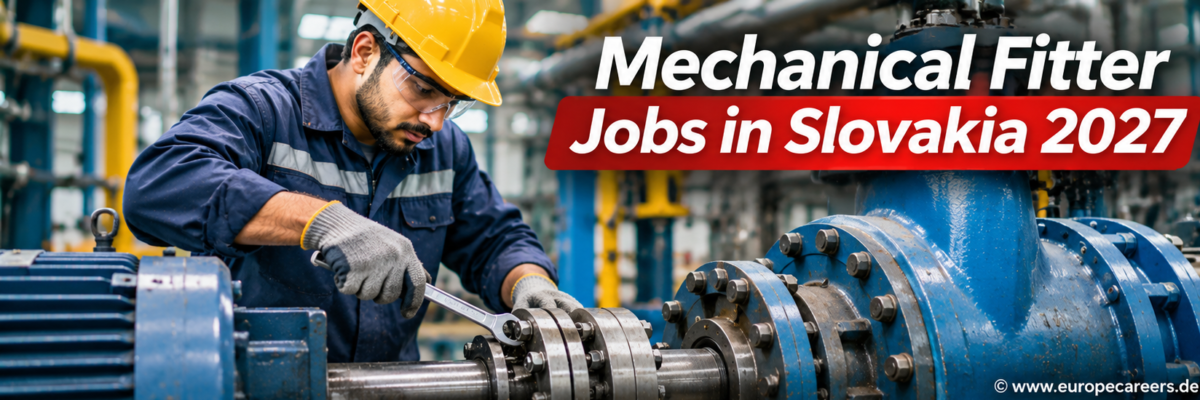
Mechanical Fitter Jobs in Slovakia 2027 – Complete Guide
If you trained as an ITI Fitter in India, worked on factory machines or spent years assembling mechanical equipment, you may already have experience relevant to European manufacturing. The challenge is finding a job that genuinely matches your skills. Mechanical fitter jobs in Slovakia 2027 can involve machine assembly, alignment, maintenance, component inspection and industrial installation, but requirements differ significantly from one employer to another.
At Europe Careers, we help Indian skilled workers understand overseas career requirements, organize technical qualifications and prepare for recruitment. This guide covers practical skills, eligibility, realistic salary references, documents, work-residence procedures and the questions you should ask before accepting an offer. It is guidance, not a claim that a particular vacancy or visa is guaranteed.
Mechanical Fitter Jobs in Slovakia 2027: Quick Overview
| Key Topic | Information for Indian Applicants |
|---|---|
| Typical roles | Mechanical fitter, machine assembler, industrial maintenance fitter, equipment installation fitter |
| Education | ITI Fitter, vocational or secondary technical training; requirements vary by employer |
| Core skills | Technical drawings, assembly, alignment, bearings, shafts, fasteners, measuring tools and safety |
| 2026 salary reference | Fitter/Assembler survey: €1,066–€2,420 gross/month for the middle 80%; not a 2027 forecast |
| Experience | Some employers request at least one year; other assembly roles may accept technical graduates |
| Work authorization | Appropriate Slovak employment residence or another applicable legal route for Indian citizens |
| Europe Careers support | Profile preparation, CV, document checklist and recruitment-process guidance |
What Does a Mechanical Fitter Do in Slovakia?
A mechanical fitter assembles, adjusts and sometimes repairs equipment so that parts fit and operate correctly. In a factory, the job may involve gearboxes, pumps, conveyors, machine frames, bearings, couplings and hydraulic assemblies. Some workers assemble new machines using drawings; others support maintenance teams when existing equipment needs inspection or repair.
Do not confuse a mechanical fitter with a general metal fitter. A metal fitter may focus on steel structures, cutting and bolting, while a mechanical fitter often works with moving machinery, precision components and alignment. A job title can overlap, so read the actual tasks carefully. Some vacancies require mechanical assembly only; others combine fitting with welding, electrical work or hydraulics.
Mechanical Fitter Qualifications and Salary – Combined Comparison
Salary depends on the employer, technical responsibility, shift schedule and experience. The figures below are grounded in 2026 job advertisements and a salary survey. They are not guaranteed pay rates for Indian applicants in 2027, and an employer advertising locally may not accept overseas candidates.
| Mechanical Fitter Role | Qualification and Practical Skills | Gross Salary Reference |
|---|---|---|
| Machine Assembly Fitter | Technical or vocational education, drawings, gearbox and mechanical subassembly fitting; one employer requested 1 year | 2026 advertised example: €1,400–€1,700/month |
| Equipment Maintenance Mechanic | Machine maintenance, troubleshooting and valid welding authorization for a specific advertised position | November 2026 advertised example: €1,566–€1,702/month |
| Production Equipment Assembler | Mechanical or technical education, reading drawings, manual dexterity; some roles open to graduates | 2026 advertised example: from €1,320/month |
| Hydraulic Machinery Fitter | Hydraulic components, machine subassemblies, technical documentation and assembly inspection | 2026 advertised example: €1,031–€1,200/month |
Survey context: the middle 80% of Slovak Fitter/Assembler respondents reported €1,066–€2,420 gross per month. The table’s employer examples describe different roles and should not be combined into a single expected salary. Check updated 2027 statutory minima and the exact employment contract before accepting an offer.
Essential Mechanical Fitter Skills Employers Look For
1. Reading Engineering Drawings
Employers often need workers who can follow dimensions, part numbers, assembly sequences and tolerances. If you have assembled pumps or machinery from drawings, explain the type of documentation you used. A technical interview may involve identifying a part, interpreting a dimension or explaining how to check the fit.
2. Measurement and Precision Fitting
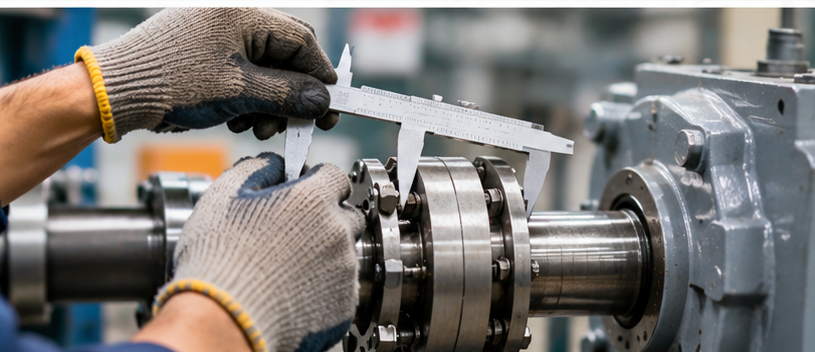
Vernier calipers, micrometers, dial gauges, feeler gauges and levels are useful fitting tools. You may be asked to measure a shaft, check a clearance or verify alignment. It is better to demonstrate accurate measurement on a simple task than to list instruments you cannot confidently use.
3. Bearings, Shafts and Couplings
Mechanical assembly often includes fitting bearings, aligning shafts, installing couplings and securing fasteners. Employers may ask how you avoid damaging components during installation. Follow manufacturer procedures and workplace safety rules rather than improvising with unsuitable tools.
4. Hydraulics and Pneumatics
Some machine-fitting positions involve hydraulic cylinders, hoses, valves or pneumatic components. You do not need these skills for every vacancy, but experience can be valuable when clearly documented. Do not claim specialist authorization merely because you have worked near hydraulic equipment.
5. Maintenance and Fault-Finding
Maintenance roles may require checking vibration, leaks, worn parts or unusual machine noise. Explain how you report faults and work with supervisors. Safety procedures are essential: equipment isolation and lockout requirements must be followed by authorized personnel before servicing machinery.
Can Indian ITI Fitter Candidates Apply Without a Degree?
A university degree is not compulsory for every mechanical fitting vacancy. Some employers accept vocational or secondary technical education, while others may request a diploma, specialized certification or substantial industrial experience. One 2026 Slovak assembly job specified secondary education without a school-leaving examination and one year of mechanical assembly practice. Another fitter position was open to fresh graduates with relevant technical education.
If you completed ITI Fitter training in India, mention the trade, training institution, year of completion and practical workshop work. Add apprenticeships, machinery experience and relevant maintenance tasks. Europe Careers can guide you in making your CV specific to the position rather than sending the same generic document for every European job.
How Much Experience Do Employers Expect?
Experience requirements are not identical across Slovakia. A basic assembly position may be suitable for a candidate with limited experience, while maintenance or installation jobs may expect independent troubleshooting. Some employers also ask for crane-operation or load-slinging qualifications, which should never be assumed to be covered by an ordinary ITI certificate.
Instead of writing “four years in mechanical,” explain that you assembled gearbox units, checked shaft alignment, replaced bearings or installed conveyors. List the machines and tools you have genuinely used. Employers are more likely to understand your suitability when the details match the advertised duties.
Where Can Mechanical Fitters Work in Slovakia?
Relevant workplaces include machinery manufacturers, industrial equipment producers, automotive suppliers, assembly plants and maintenance contractors. Some jobs are based in a fixed workshop; others involve customer-site installation or regular factory shutdown work. Location affects travel time, accommodation and shift arrangements.
Indian applicants should ask whether a vacancy is open to people applying from abroad. A local advertisement may assume the candidate already has a right to work in Slovakia. If the company offers travel between sites or assignments outside Slovakia, ask how the employment contract and authorization will work.
Mechanical Fitter Salary, Overtime and Living Costs
Slovak fitter salaries are generally quoted in euros before employee taxes and social contributions. A 2026 salary survey showed €1,066–€2,420 gross monthly for the middle 80% of Fitter/Assembler respondents. Individual advertised salaries can fall within or outside that range, depending on duties and contract terms.
Before deciding whether the salary is attractive, ask about the basic wage, allowances, overtime, weekend work, shift premiums and accommodation. Find out whether rent, transport or meals are deducted. If you support family in India, calculate expected savings only after understanding your likely take-home pay and expenses.
Europe Careers can help you understand the questions to ask about a proposed employment offer. The employer remains responsible for giving accurate written terms.
How Europe Careers Can Guide Your Recruitment Preparation
For many Indian candidates, the difficult part is presenting years of practical work in a way that an overseas recruiter can assess. Europe Careers can provide guidance on the following preparation steps, depending on the services available:
- Skills profile: identify your mechanical fitting experience, machinery, tools and training.
- Professional CV: organize ITI, diploma or apprenticeship details and relevant projects.
- Application readiness: understand the employer’s interview, drawing test or practical assessment requirements.
- Offer understanding: check salary, shift pattern, workplace, accommodation and deductions.
- Documentation: prepare a checklist for employer and employment-residence requirements.
- Next-step guidance: understand the general sequence before making travel commitments.
We cannot guarantee a vacancy, selection, placement or immigration outcome. These depend on your qualifications, employer demand and the applicable rules.
Slovakia Work Permit and Single Permit Process for Indians
Indian citizens generally need appropriate authorization to work in Slovakia. A common route is temporary residence for employment based on a Labour Office confirmation that a vacancy may be filled, often described as a single permit. Other routes and exemptions may apply depending on the circumstances.
Under IOM Slovakia guidance updated in August 2026, the prospective employer generally reports the vacancy at least 20 working days before requesting confirmation from the Labour Office, subject to exceptions. The employer requests the confirmation and the candidate follows the relevant residence-application process. The precise right to start working depends on the applicable legal conditions and the application’s status.
A tourist visa alone does not authorize ordinary employment as a mechanical fitter. Europe Careers can explain the general steps and help candidates organize documents, but the Slovak authorities make the official decisions. Always confirm the rules applicable to your case before booking travel.
Documents Indian Mechanical Fitters Should Prepare
Keep a valid passport, updated CV, ITI or technical diploma, experience letters and apprenticeship records ready. Where relevant, gather certificates for machinery, safety training, crane operation or other specialized skills. The immigration process may also require criminal-record documents, accommodation evidence, official forms and properly translated or legalized records.
Do not spend money on unnecessary translations or certificates before confirming what the employer and competent authorities require. Europe Careers can help you organize a document checklist and understand what information may be requested.
Preparing for a Mechanical Fitter Trade Test
Some employers assess candidates through practical tasks. You may need to read a simple drawing, measure a component, select the right tool, identify a bearing or explain a safe assembly sequence. Maintenance applicants may be asked how they would report a fault or approach a machine that is not operating correctly.
Practise explaining your work in clear English if the employer uses English. Do not assume that IELTS is required for every vacancy, and do not assume English alone will be sufficient. Some roles specify Slovak or another workplace language for safety and instructions.
Common Mistakes Indian Applicants Should Avoid
Do not apply to a specialist maintenance role if your experience is limited to basic assembly without understanding the gap. Avoid claiming licences you do not hold. Verify the employer, exact workplace, salary and employment type before paying any fees. Be cautious of agents promising guaranteed visas or asking for money without proper agreements and receipts.
Also check whether the advertised wage includes bonuses or allowances. A high headline figure may not represent the guaranteed basic salary. Never make travel arrangements based only on an interview invitation or verbal promise.
Frequently Asked Questions – Mechanical Fitter Jobs in Slovakia 2027
Click any question to expand the answer. For individual guidance, contact Europe Careers.
Can Indian ITI Fitter graduates apply for mechanical fitter jobs in Slovakia?
Yes, if the employer accepts your vocational training and practical experience. Europe Careers can help you prepare a technical CV and understand the vacancy requirements.
Is a mechanical engineering degree compulsory?
No. Some roles accept secondary technical or vocational education. More specialized maintenance jobs may require additional training, experience or licences.
What is the salary for mechanical fitters in Slovakia in 2027?
There is no confirmed general 2027 salary. A 2026 fitter/assembler survey indicated €1,066–€2,420 gross per month for the middle 80% of respondents, while individual advertised jobs varied. Your written offer controls.
How much experience do employers require?
It depends on the role. One 2026 machinery assembly vacancy requested one year, while other employers considered recent technical graduates. Actual hands-on skills matter.
Is IELTS required for Slovakia mechanical fitter jobs?
There is no universal IELTS requirement for all mechanical fitting roles. Some employers may require English or Slovak for safety and technical instructions.
Can Europe Careers guarantee placement or a work permit?
No. We can guide application preparation and documentation, but employers make recruitment decisions and Slovak authorities decide residence applications.
How do I start with Europe Careers?
Share your CV, ITI or diploma details, years of experience and the machines you have worked on through our Contact Us page. Our team can discuss available guidance and next steps.
Why Contact Europe Careers?
Europe Careers focuses on helping candidates understand international career pathways and prepare for opportunities with realistic expectations. We can guide you in explaining your technical experience, organizing qualifications, preparing your CV and understanding the general recruitment and residence process.
Our guidance is designed to help you make informed decisions. Job availability, employer selection and immigration approvals cannot be promised in advance.
Contact Europe Careers
Interested in mechanical fitter jobs in Slovakia in 2027? Share your ITI Fitter or technical qualifications, machinery experience, updated CV and any relevant certificates. Our team can discuss available guidance and appropriate next steps.