
Blue-Collar Jobs in Europe: Job Types, Eligibility & Application Guide


Blue collar jobs in Europe can offer a practical route to a new career if you have hands-on skills, reliable work experience and the right to work in your destination country. Employers recruit people to build homes, maintain machinery, move goods, prepare food and keep essential services running. The challenge is finding a position that matches both your skills and your immigration situation.
A good application starts with three questions: Can you do the job? Can you legally take it? And will the pay cover your life there? This guide explains how to answer each one before spending money on recruitment or relocation.
Quick answer: Skilled trades, manufacturing, logistics, hospitality and seasonal work are useful areas to investigate. Overseas applicants should check the exact vacancy, language requirements, qualifications and work-permit route. A labour shortage or an advertisement mentioning “visa sponsorship” does not guarantee eligibility or approval.
Research checked: 12 November 2026. This is a career guide, not an advertisement for live vacancies. Images are AI-generated editorial illustrations.
What are blue collar jobs?
Blue collar work usually involves practical, physical or technical tasks in a workshop, on a building site, in a warehouse or in a service operation. The term covers a wide range of skill levels. A qualified electrician and a packing assistant may both be described as blue collar workers, but their training, responsibilities and hiring requirements are very different.
Some jobs provide training at work. Others require a vocational qualification, trade certificate, professional licence or recognised safety training. “No university degree required” does not automatically mean “no qualifications required.”
Which blue collar jobs in Europe should you target?

The European Labour Authority’s 2025 labour shortages report identifies trades and machine operators among the groups affected by shortages. It also shows why location matters: an occupation can be short of workers in one country and have a surplus in another. Use this evidence to focus your research, then check current local vacancies.
The earlier 2024 ELA report highlighted welders, cooks and building electricians among widespread shortage occupations. These findings are a useful starting point, rather than a promise that every employer is recruiting internationally.
| Job area | Roles to search | Evidence employers may request |
|---|---|---|
| Construction and building services | Electrician, plumber, carpenter, bricklayer, HVAC technician | Trade training, site experience, local safety knowledge and any required recognition |
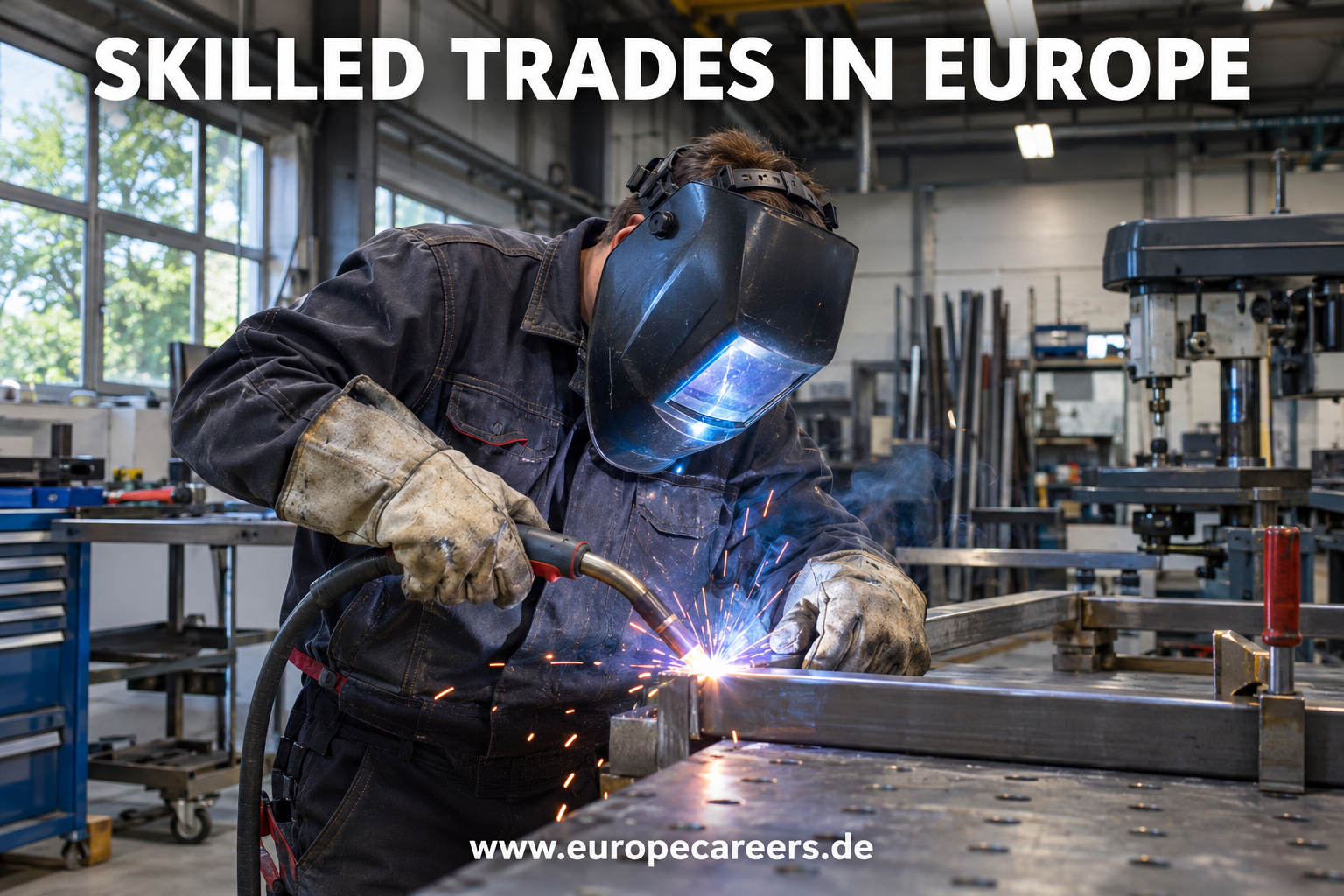
| Metalwork and manufacturing | Welder, fabricator, CNC operator, maintenance technician | Process-specific skills, machine experience, drawings knowledge and practical tests |
| Warehousing and logistics | Order picker, packer, warehouse operative, forklift operator | Shift availability, safe handling, scanner experience and applicable equipment training |
| Transport | Truck driver, bus driver, delivery driver | Correct licence category, professional driver qualifications where required and driving history |
| Hospitality and food production | Cook, baker, kitchen assistant, food-processing operative | Relevant experience, hygiene knowledge and ability to work the advertised schedule |
| Agriculture and seasonal work | Harvest worker, greenhouse worker, packing operative | Availability for the season, physical suitability and the appropriate work authorisation |
Do not describe yourself only as a “general worker” if you have a trade. A welder should identify the processes and materials they can handle. A machine operator should name the equipment used. Specific details help employers assess your experience quickly.
How to choose a European country for work

There is no single best country for every worker. Build a shortlist around your occupation, languages, legal eligibility and realistic housing budget. Europe also includes countries outside the EU; the UK, Norway and Switzerland have their own relevant arrangements and should be researched separately.
Germany: start with your trade and qualification
If Germany is your target, compare your training and experience with the role before applying. Read the official professionally experienced workers visa guidance. This route concerns qualified employment in non-regulated professions and has conditions covering qualifications, recent relevant experience, a concrete offer, pay and employment approval. It is not a general visa for every helper or packing job.
German language ability can also make site instructions, training and everyday administration easier. Ask each employer which language level is needed for the actual position.
The Netherlands: read the permit and housing details together
For a Dutch job, check whether the vacancy accepts applicants with your current work status. The EU Immigration Portal’s Netherlands guidance explains the employed-worker route and relevant procedures. An agency’s willingness to interview you is only one part of the process.
If accommodation is offered, request the address or location, rent, deposit, room occupancy and transport arrangements. Ask what happens to the accommodation if the assignment ends.
Poland: confirm the legal employer and applicable procedure
For Poland, identify who signs the contract and who handles any employer-side paperwork. The official employed-worker information for Poland is a starting point for checking the applicable conditions. Confirm current requirements with the responsible Polish authority or consulate before making travel commitments.
Other destinations: use the same comparison method
For any destination, search your exact occupation and region rather than assuming a whole country has easy access to work. Compare five to ten relevant vacancies. Record the language, training, pay, contract type and work-authorisation requirements. A shortlist based on these details is more useful than a ranking based on headline salaries.
Blue collar salaries in Europe: compare the full offer
A Europe-wide salary range can hide more than it reveals. Pay varies by country, city, trade, experience, collective agreement, guaranteed hours and shift pattern. The figure on an advertisement may be gross pay before deductions, or it may include overtime that is not guaranteed.
Use current offers for the same job and location, then ask for these details in writing:
- Gross hourly or monthly base pay and guaranteed paid hours.
- Overtime, night-shift and weekend rates, including when they apply.
- Tax and social-insurance treatment and an explanation of estimated take-home pay.
- Accommodation, transport, meals, insurance or other deductions.
- Paid leave, probation, contract duration and notice terms.
- Whether holiday payments or bonuses are included in the advertised figure.
A simple pay calculation
Illustrative arithmetic only: If an offer pays €15 gross per hour for 40 paid hours each week, average monthly gross pay is approximately €2,600 (€15 × 40 × 52 ÷ 12). This is not a market wage estimate or a take-home-pay forecast. Actual pay depends on the contract and hours worked.
Next, build a budget using your estimated net income. Subtract rent, utilities, food, commuting, insurance costs not already deducted and any regular commitments at home. Keep a separate relocation fund for deposits, travel and the period before your first payment. Do not base essential spending on optional overtime.
Can foreign workers get blue collar jobs with visa sponsorship?
Yes, some employers recruit internationally, but eligibility depends on the destination and the job. EU nationals can work in another EU country without a work permit, subject to applicable residence conditions. For non-EU applicants, check the destination’s national rules and the permit that fits your circumstances.
“Visa sponsorship” is a recruitment phrase. Ask what the employer actually means: preparing documents, applying for a permit, paying specified fees or providing relocation help. Only the responsible authority can decide an application. Finding a vacancy through EURES does not remove national immigration requirements, as EURES explains.
For applicants from India or another non-EU country, the practical first step is to check whether the role qualifies for an available route and whether the employer will complete the required steps. Entry-level roles can have different restrictions from qualified trades. Use the official embassy or immigration checklist rather than a generic agent’s document list.
Documents to prepare
- A valid passport and a clear CV tailored to the occupation.
- Training certificates, trade qualifications and relevant licences.
- Experience letters showing dates, duties and employer contact details.
- Professional references and evidence of specialist skills where appropriate.
- The written offer or contract and employer forms required for the route.
- Translations, recognition decisions, insurance or other supporting documents when the official checklist requires them.
Requirements differ by route. Do not assume a tourist visa authorises employment, or that permission issued by one country automatically allows you to start a job in another. Verify your exact status before travelling or starting work.

Where to find blue collar jobs in Europe

Start with EURES, the destination’s public employment service and employers’ own careers pages. Specialist trade recruiters can also help, provided you independently check the company and the terms of the assignment. A listing on a recognised platform still needs careful reading.
Search by job title, location and skill. Useful combinations include “MIG MAG welder,” “CNC machine operator,” “warehouse operative,” “industrial maintenance technician” and the local-language equivalent of your occupation. Search for permit or relocation support separately, then confirm it with the employer.
Build a CV that shows what you can do
Use a short profile followed by recent work experience, training, languages and relevant licences. Keep it easy to scan. Instead of “worked in a factory,” explain the machinery, materials or tasks you handled. Include measurable results only when you can support them.
For example, a warehouse applicant might describe goods receiving, picking, packing, scanner use and stock checks. A cook can describe kitchen sections, service volume and food-safety responsibilities. These details help an employer understand your fit without guessing.
A practical application process
- Choose one main role. Match it to your strongest recent experience.
- Shortlist destinations. Check language, permit eligibility and living costs.
- Collect evidence. Prepare certificates, references and accurate employment dates.
- Read each vacancy. Separate essential requirements from preferences.
- Apply directly where possible. Explain your skills, location, availability and work-authorisation needs.
- Prepare for assessment. Ask about interviews, practical tests and any safety induction.
- Review the offer. Confirm employer identity, pay, hours, deductions and permit responsibilities.
- Plan the move. Verify the required authorisation, housing and arrival arrangements before committing.
Keep a simple application tracker with the employer, role, date, contact, salary basis and next step. Follow up politely, and tailor your next application using what you learn.
How to check a job offer and avoid recruitment scams
A convincing logo or stamped PDF is not enough. Find the employer’s official website independently and contact the company using details published there. Confirm the vacancy, recruiter and legal entity that will employ you.
EURES fraud guidance recommends checking sender domains and being cautious about requests for financial information. Treat guaranteed approval, pressure to pay immediately and requests to receive or forward money as warning signs.
- Ask for the full contract before accepting or travelling.
- Get every fee, deduction and refund term in writing; verify whether a recruitment fee is permitted under the applicable rules.
- Check agency registration where required and confirm the actual work location.
- Use secure, verified channels when sharing identity documents.
- Ask who provides safety training, protective equipment and workplace insurance arrangements.
- Clarify what happens if the job is delayed, cancelled or ends during probation.
If an offer feels rushed or the answers keep changing, pause the process and verify the details with the relevant public employment service or authority.
Frequently asked questions
Can I get a blue collar job in Europe without a degree?
Many practical jobs do not require a university degree. Skilled positions may still require vocational training, recognised qualifications, experience or licences. Immigration eligibility is a separate check.
Are there jobs for beginners?
Some employers offer entry-level packing, cleaning, kitchen or seasonal roles with workplace training. Whether an overseas beginner can take the job depends on the employer, destination and available legal route.
Is English enough?
It depends on the workplace. Some teams use English, while others require the local language for instructions, customer contact or safety. Confirm the requirement before applying and describe your ability honestly.
Which blue collar job pays the most?
There is no reliable single answer across Europe. Compare current offers for your specific trade, experience and region. Specialist skills and responsibilities can affect pay, but deductions and living costs determine how useful an offer is for you.
Does the employer provide accommodation?
Some do. Ask whether it is free or deducted from wages, whether you share a room and how long you can stay after the employment ends. Include travel between housing and work in your budget.
How long does a work visa take?
Processing times vary by country, application route, appointment availability and document checks. Use the responsible authority’s current guidance and avoid committing to a fixed travel date based only on a recruiter’s estimate.
Is a shortage occupation a guarantee of sponsorship?
No. Shortage data describes labour-market conditions. An individual employer must still be willing and able to recruit you, and you must meet the applicable permit conditions.
Your next step
Choose the job you can demonstrate most confidently, identify two or three suitable destinations and compare real offers carefully. A clear contract, a workable budget and the correct authorisation matter as much as getting an interview. Keep exploring Europecareers.de for European career guidance, and verify each opportunity through official sources before making a decision.




[…] For a deeper application walkthrough, read our Complete Guide to Finding Jobs in Europe. If your background is practical or technical, our Blue Collar Jobs in Europe</a draft covers trade-specific considerations. […]