
Germany Just Raised the Work Limit for International Students — Here’s What Actually Changes
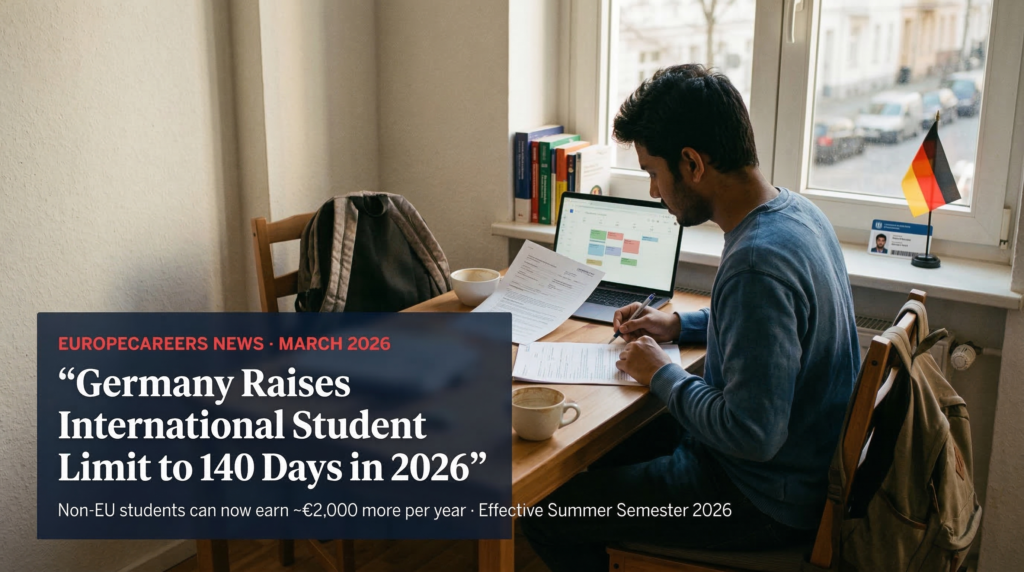
The German government has amended the employment rules for non-EU students on residence permits under §16b of the Residence Act. Effective immediately for the summer semester of 2026, the annual work ceiling has moved from 120 full days to 140 — or from 240 to 280 half-days, depending on how your shifts are structured. The change was first flagged by education portal GradGermany on 7 March.
No press conference, no headline announcement. The kind of regulatory update that slips past most people — until they realise it directly affects their income and their visa trajectory. So let’s break down what this actually means in practice.
Twenty Days Doesn’t Sound Like Much — Until You Do the Maths
At typical student wage rates in Germany, those extra 20 working days translate to roughly €2,000 in after-tax income. For anyone living in Munich or Frankfurt, that’s two months of rent. In Leipzig or Dresden, it stretches further. It’s the difference between a manageable semester and a stressful one.
Beyond the immediate cash, the expanded allowance is meaningful for master’s students in engineering, computer science and healthcare who want to take on longer internships. A proper placement rather than a truncated one looks very different on a Blue Card application — and German employers notice.
“An extra 20 working days a year is roughly €2,000 after tax — enough to cover two months’ rent in many German cities. That’s not a rounding error. That’s real financial breathing room.”
How Does Germany Now Compare to the UK and Canada?
This change nudges Germany closer to its main competitors for international student talent. The UK currently permits 20 hours of work per week during term time, and Canada allows up to 24 hours. Germany’s new 140-day annual cap doesn’t map perfectly onto a weekly hour model, but the intent is similar: loosen restrictions enough to help students cover living costs without compromising their studies.
For smaller German employers — the SMEs in hospitality, IT support and retail that have been quietly struggling with staff shortages — the change widens the casual labour pool at a useful moment. It’s not a fix for structural workforce problems, but it helps.
- The 140-day limit applies to non-EU students on a §16b residence permit
- The change takes effect from the summer semester 2026 — immediately
- Half-days (under 8 hours) count as 0.5 days toward your annual total
- Exceeding the cap still risks your visa status — track hours carefully
- Advisers recommend dedicated apps like Zeiterfassung Plus or Studo Worklog
- The policy is due for review in 2028 — further expansion is not guaranteed
The Bigger Picture: Germany Wants to Keep You After You Graduate
This rule change didn’t happen in isolation. It sits inside a broader strategy Germany has been building since late 2025 — one focused on retaining international graduates rather than watching them leave for Canada, Australia or the Netherlands the moment they have their degree in hand.
The country unveiled its Skilled Labour Immigration Strategy last December, and the 140-day amendment is one of several signals that officials are taking it seriously. The logic is straightforward: a student who has spent three years working part-time in a German company, building relationships and understanding workplace culture, is a far stronger candidate for a permanent skilled visa than someone arriving cold from abroad. Germany is trying to build that pipeline.
Whether the strategy works will depend on more than work-hour adjustments — housing costs, language barriers and bureaucratic friction all play a role. But this is a genuine step in the right direction, and it matters for anyone currently enrolled or planning to study in Germany in the next few years.
One Warning Worth Taking Seriously
Universities across Germany have welcomed the change, but international student advisers are raising a consistent caution: the higher cap makes it easier to lose track of your days. Previously, 120 days felt like a firm, visible limit. At 140, there’s a temptation to keep pushing — especially during exam prep periods when income pressure spikes.
Exceeding your work allowance is not a minor administrative issue. It can trigger visa status reviews and, in serious cases, affect your ability to apply for a post-study work permit. The extra 20 days are a benefit — but only if you stay on the right side of the line. Log your hours properly, from the very first shift of the year.

Great opportunity!!