Engineering & Tech
Mechanical, automotive, electrical, mechatronics, civil and aerospace engineering.
Explore Universities, International Programmes and Affordable Study Pathways.
Admission, tuition costs, language requirements and visa decisions depend on the chosen university, programme and your individual circumstances.

Germany combines research-focused higher education, practical learning opportunities and a wide range of public and private institutions. The right destination depends on your chosen subject, academic background, budget and professional goals.

Explore traditional research universities (Universitäten) and universities of applied sciences (Fachhochschulen / HAW) offering state-of-the-art laboratory research and hands-on industrial practice.
Access hundreds of degree programmes taught entirely in English, particularly at the Master's level in Engineering, Computer Science, Data Analytics and International Business.
Many Bachelor's and Master's programmes at public institutions do not charge general tuition fees, although modest semester contributions and specific state exceptions apply.
A German degree provides strong technical competence, industry exposure through mandatory internships (Praxissemester), and an 18-month post-study job seeker visa.
Programmes differ by duration, instructional language, academic prerequisites and tuition models. Select the tier that matches your qualifications:

For students who hold a recognized higher education entrance qualification. Direct admission or a preparatory pathway may be required.

For graduates holding a recognized Bachelor's degree meeting discipline-specific ECTS credits, grades and language criteria.

For candidates with outstanding Master's degrees aiming for individual research with a doctoral supervisor or structured PhD school.

Preparatory bridge college for Indian 10+2 graduates whose schooling does not grant direct entrance. Concludes with the Feststellungsprüfung.

Degree programmes where 100% of lectures, laboratory assignments, exams and research theses are in English. High concentration across Engineering, Data Science, AI, Biotechnology and Management.
Germany is internationally renowned for technological excellence and rigorous scientific research. Discover academic specializations chosen by international scholars:
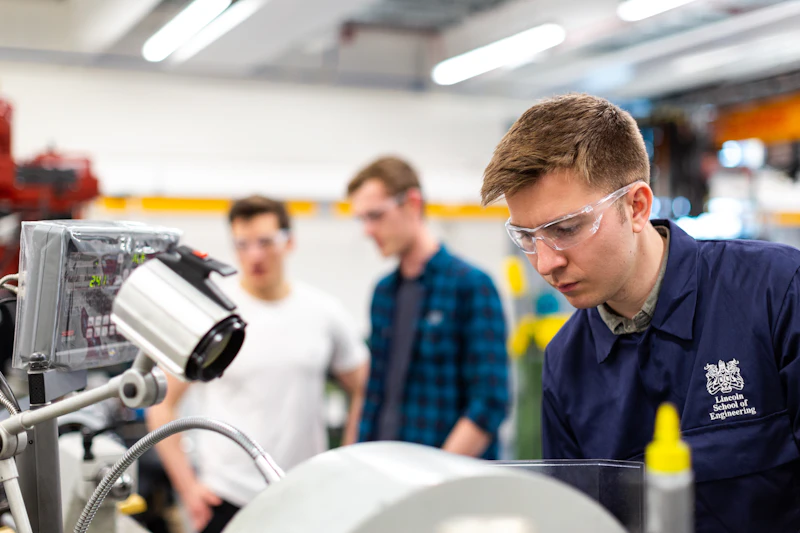
Mechanical, automotive, electrical, mechatronics, civil and aerospace engineering.

Software engineering, artificial intelligence, cybersecurity, data science and robotics.

International management, MBA, finance, marketing and industrial engineering.
Physics, molecular biology, chemistry, biotechnology, mathematics and applied materials.
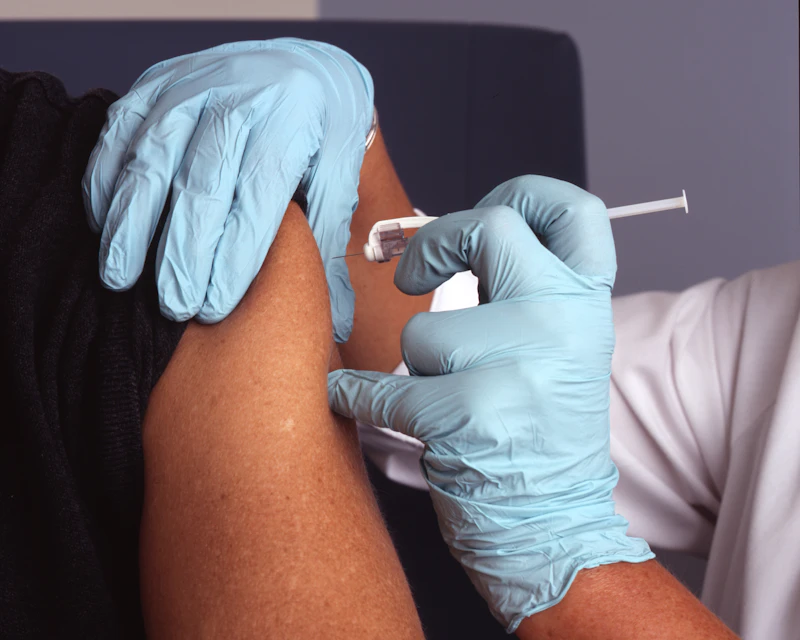
Biomedical science, public health, healthcare management and medical technology.

Renewable energy systems, environmental engineering, climate physics and circular economy.
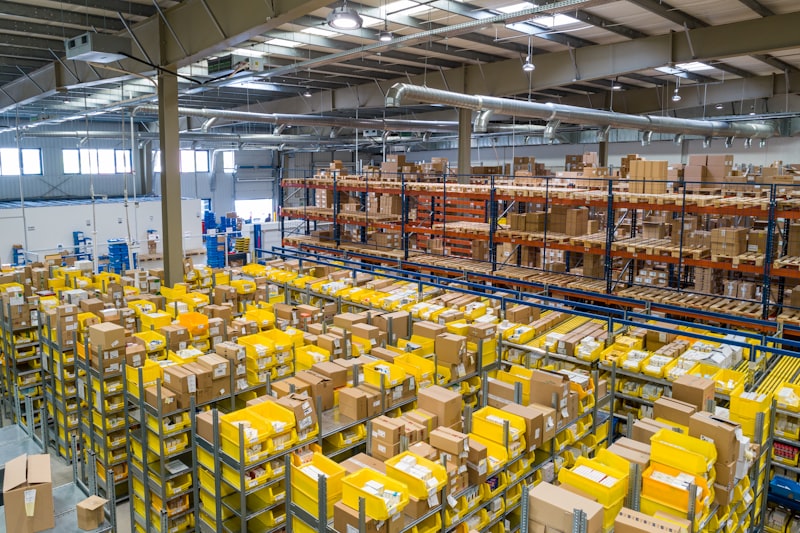
Supply chain management, transport logistics, industrial operations and smart production.

International relations, public policy, development studies and interdisciplinary social sciences.
Academic eligibility depends on your educational board, previously earned degrees, subject credits, overall percentage and the specific admissions rules of the German university.

Direct entry to university usually requires completing 1 year of Bachelor's in India, or qualifying through JEE Advanced (for STEM). Standard 10+2 applicants complete a 1-year Studienkolleg course followed by the Feststellungsprüfung (FSP).
A 4-Year Bachelor's (BTech/BE/BS) is recognised as equivalent to a German Bachelor's (240 ECTS). 3-Year Bachelor's (BSc/BCom/BA/BBA) holders are accepted by many universities, while others may require a 1-year postgraduate diploma or bridge modules.
Requires a recognised Master's degree (MTech/ME/MSc/MA), an in-depth research proposal (Exposé) aligned with departmental focus, and formal supervisor acceptance.

The Academic Evaluation Centre (Akademische Prüfstelle - APS India) is an official service of the German Embassy in New Delhi that verifies the authenticity of Indian educational documents.
An APS certificate is mandatory for almost all Indian applicants applying for a German student visa or submitting applications through uni-assist and direct university portals.
Language requirements depend entirely on the language of instruction specified by your chosen degree programme.
IELTS Academic (typically 6.5 overall with no band below 6.0) or TOEFL iBT (85–95+ points). While some universities accept Medium of Instruction (MOI) letters, German visa consulates strongly favour formal test scores.
Degrees in German require academic C1-level proficiency: TestDaF (4x4), DSH-2, or telc C1 Hochschule. Preparatory Studienkolleg courses generally require B1 or B2 level German for entrance examinations.
Europe Careers provides structured online and offline German language classes (A1–B2) with certified instructors, helping students meet admission and day-to-day living requirements.
German higher education operates across two main academic semesters. Plan your application 8 to 12 months in advance to account for APS verification, language exams and student visa appointments.
Begins September/October. The vast majority of Bachelor's and Master's degree programmes commence in this intake with maximum course offerings.
Begins March/April. A selective offering of Master's degrees and specific undergraduate courses open for summer enrollment.
Germany's higher education system is predominantly state-funded. Tuition rules depend on the university's governance, the federal state (Bundesland) and the programme type.
| Study Category | Tuition Fee Guidance | Semester Contribution |
|---|---|---|
| Public University Bachelor's Most Federal States |
€0 General Tuition Fee Completely subsidized by the German state. |
€70 – €430 / semester (Includes transit ticket & student services) |
| Public University Master's Consecutive Master's |
€0 General Tuition Fee No general tuition for consecutive Master's degrees. |
€70 – €430 / semester |
| Baden-Württemberg Public Unis Non-EU International Students |
€1,500 per semester (~€3,000 / year) State statutory fee for non-EU students (subject to exemptions). |
Plus standard semester contribution (~€150–€200) |
| Selected Bavarian Public Unis e.g. TUM & specific institutions |
Programme-Specific Non-EU Fees Varies from €2,000 to €6,000+ per semester. |
Plus standard semester contribution |
| Private Universities State-Accredited Private Unis |
€5,000 to €15,000+ per year Tuition charged directly by the private institution. |
Usually included or nominal administration fee |
| Continuing-Education Master's Executive & Specialised Master's |
€10,000 to €30,000+ for full course Even at public universities, executive MBAs charge tuition. |
Plus standard semester contribution |
Tuition is separate from living costs. To obtain a German student visa, international applicants must prove sufficient financial resources to cover accommodation and day-to-day living expenses.
The published German student visa financial requirement for 2026 is established by federal authorities:
*Indicative INR conversion calculated at €1 ≈ ₹106.40 (reference date October 2026). A blocked account is living expense proof; it is not a university fee.
While public university tuition is heavily subsidised, merit-based scholarships and student assistance programmes are available to assist with living expenses.
The German Academic Exchange Service (DAAD) offers competitive grants primarily for Master's and PhD research scholars (e.g. EPOS, Helmut-Schmidt).

National scholarship programme awarded on merit and civic engagement. Provides €300/month (co-funded by federal government and private sponsors).
Foundations such as Heinrich Böll, Friedrich Ebert, Konrad Adenauer and Rosa Luxemburg offer stipends to exceptional international students with outstanding academic records.
National visa applications (Visum zu Studienzwecken) are processed through the German Embassy in New Delhi and Consulates General (Mumbai, Chennai, Kolkata, Bengaluru) or the official Consular Services Portal.
Consult official consular portals for current appointment slots and checklist guidelines:
Studying in Germany provides generous work permissions, high living standards, affordable student transport and an 18-month post-study job seeker visa.

Most students live in university residence halls (Studierendenwerk) or shared apartments (Wohngemeinschaften - WG). Apply early through official student portals as housing markets in major cities are competitive.
International students are legally permitted to work 140 full days or 280 half days per calendar year (or up to 20 hours per week during term time). Academic student assistant roles (HiWi) are exempt from this limit.

Graduates of German universities are entitled to apply for an 18-month residence permit under Section 20 (3) AufenthG to search for employment matching their degree qualifications, with unrestricted work rights during this search.
Transparent, accurate answers addressing the most common questions raised by Indian students and parents.
Many Bachelor's and Master's programmes at public institutions do not charge general tuition fees. However, students must pay a semester contribution (€70–€430/semester). Additionally, non-EU students pay tuition fees in Baden-Württemberg (€1,500/semester) and at specific Bavarian public universities.
The published financial proof reference for 2026 is €11,904 for one year, which corresponds to €992 per month in a blocked account. At indicative exchange rates (~€1 ≈ ₹106.40), this equates to approximately ₹12.67 Lakhs annually.
Yes. An APS certificate issued by the Academic Evaluation Centre (APS India) is mandatory for almost all Indian applicants applying for a German student visa or submitting applications through uni-assist and direct university portals, with specific exemptions for doctoral scholars or foreign school boards.
Yes. Standard 12-year Indian school certificates typically lead to a 1-year preparatory Studienkolleg course followed by the Feststellungsprüfung (FSP). Direct Bachelor's entrance is possible if you have completed 1 year of recognized university education in India, or qualified in JEE Advanced (for STEM programmes).
Yes, hundreds of degree programmes—especially at the Master's level—are taught 100% in English across Engineering, Computer Science, Data Analytics, Natural Sciences and Business. English proficiency is proven via IELTS (usually 6.5) or TOEFL (usually 85–95+).
No. If your programme is taught entirely in English, German language certificates are generally not required for admission. However, basic conversational German (A1–A2) is strongly recommended for daily life, part-time student jobs and networking.
No. Public universities in Baden-Württemberg charge non-EU students €1,500 per semester. Certain Bavarian public universities charge non-EU tuition for specific degrees. In addition, continuing-education degrees (executive MBAs) charge tuition across Germany.
A Studienkolleg is a 1-year academic preparatory bridge college for international students whose school-leaving certificates do not provide direct entrance to a German university. It bridges academic gaps and concludes with the Feststellungsprüfung (FSP).
Yes. International students holding a valid study residence permit can work up to 140 full days or 280 half days per calendar year (or alternatively up to 20 hours per week during semester periods). Academic assistant positions (HiWi) are permitted beyond this cap.
Yes. Upon graduating from a recognized German university, international graduates are entitled to apply for an 18-month job seeker residence permit under Section 20 (3) AufenthG, allowing unrestricted employment while securing a qualifying career role.
No. Scholarships in Germany (such as DAAD or Deutschlandstipendium) are highly competitive, merit-based, and subject to strict deadlines and independent selection panels. No consultancy can guarantee scholarship awards.
No. Europe Careers provides professional guidance, profile evaluation, APS checklists, German language training and application support. University admission decisions rest entirely with German universities, and visa decisions rest exclusively with the German missions.
Unlike other countries where university rankings dominate, all German public universities maintain high, federally accredited academic standards. Choose universities based on your specific specialization, curriculum credits, faculty research strengths, lab facilities and living costs.
You should begin preparing 8 to 12 months before your intended semester intake. This allows adequate time for language test preparation (IELTS/Goethe), securing your APS verification certificate, university shortlisting, transcript evaluations and booking visa appointments.
From choosing the right programme to understanding eligibility, APS, language requirements and student visa documentation, prepare your next steps with reliable guidance.